

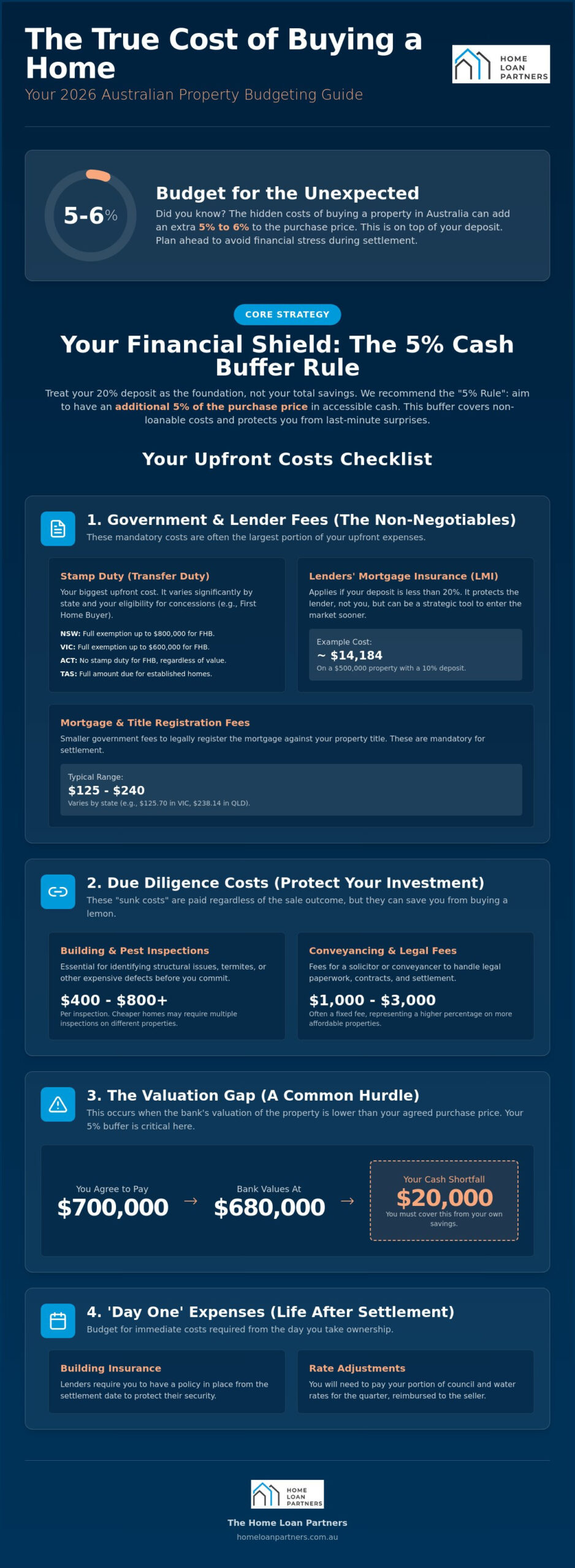
Did you know that the hidden costs of buying a house in australia can add an extra 5% to 6% to your property’s purchase price? For many Australians, the excitement of finding a dream home is often clouded by the fear of a last minute loan rejection or confusion over complex government fees. It’s a significant life milestone, and it’s perfectly normal to feel anxious about whether your savings will cover everything beyond the initial deposit.
We’re here to act as your steady guide, ensuring you step into this new chapter with financial confidence and zero surprises. This 2026 budgeting guide provides a clear checklist of every possible expense you might encounter, including state specific stamp duty rates and those easily overlooked mortgage registration fees. You’ll learn which costs are negotiable and how to distinguish between upfront hurdles and ongoing commitments. Our goal is to simplify these complex arrangements so you can focus on the joy of your future security while we help manage the heavy lifting of a stress free settlement process.
Key Takeaways
- Learn why we recommend a 5% cash buffer above your deposit to comfortably manage the hidden costs of buying a house in australia.
- Identify the non-negotiable state fees and insurance premiums that can significantly impact your final settlement figure.
- Understand how professional oversight during the due diligence phase prevents expensive structural surprises after you move in.
- Prepare for essential “Day One” expenses, such as insurance and rate adjustments, that ensure a seamless transition into your new home.
- Discover how a dedicated mortgage broker acts as your collaborator to identify fee-waiver opportunities and lower your initial financial burden.
Beyond the Deposit: Why You Need a ‘Buffer’ in 2026
Saving a 20% deposit is a massive achievement. However, treating that specific number as your total budget is a common mistake that can lead to heartbreak at the finish line. In the current Australian property market context, the 20% mark is just the foundation. You need a buffer. We recommend the “5% Rule” to protect your interests; always aim to have an additional 5% of the purchase price in liquid cash before you start making offers. This proactive strategy transforms you from a hopeful bidder into a confident buyer who can handle the heavy lifting of a complex transaction.
This cash isn’t just for emergencies. It covers the hidden costs of buying a house in australia that banks won’t always include in your loan. These are often “sunk costs,” such as the $400 to $800 you might spend on combined building and pest inspections. You pay these regardless of the sale outcome. Other costs, like Lenders’ Mortgage Insurance (LMI), are “capitalised,” meaning they are added to your loan balance. If you don’t account for how these fees interact, your final loan approval could be rejected because your genuine savings don’t meet the lender’s strict criteria at the last minute.
The True Cost of a ‘Cheap’ Property
A lower price tag doesn’t always mean a better deal. In fact, more affordable properties often carry higher relative hidden costs. While you are buying a house in Australia, fees like conveyancing and building reports are often fixed. On a $500,000 home, an $800 inspection is a larger percentage of your budget than on a million-dollar property. Older, cheaper homes also carry a higher risk of structural issues. This often means you’ll pay for multiple inspections on different houses before you finally find a property that is safe to purchase. Under-budgeting for these variables is a risk that leads to a stressful shortfall on settlement day.
Borrowing Power vs. Buying Power
There’s a vital difference between what a bank says you can borrow and what you can actually spend. Most people use a home loan calculator to see their monthly repayments, but these tools don’t always factor in the upfront cash required for government fees. A major hurdle in 2026 is the “valuation gap.” If you agree to buy a house for $700,000 but the bank values it at $680,000, they will only lend based on that lower figure. You’ll need to cover that $20,000 difference from your own pocket. Having a robust cash buffer ensures this gap doesn’t derail your settlement or force you to abandon your dream home.
Government and Lender Fees: The Non-Negotiables
While you can negotiate a purchase price, you can’t haggle with the tax office. These statutory fees often represent the largest chunk of the hidden costs of buying a house in australia. Understanding how these charges apply to your specific situation is essential for a stress-free settlement, as it allows you to plan your cash flow with precision rather than guesswork.
Understanding Stamp Duty and Concessions
Stamp duty, or transfer duty, is typically your biggest upfront expense. In 2026, your location determines your bill. For example, first home buyers in the ACT pay no stamp duty regardless of the property’s value. In NSW, you’re eligible for a full exemption up to $800,000, while Victorian buyers see exemptions only up to $600,000. If you’re buying an established home in Tasmania, you’ll need to budget for the full amount, as concessions for established properties ended in July 2026. This government guide to buying a house provides a broader look at how these state taxes interact with your overall financial journey.
Beyond the tax itself, you must account for smaller government charges. Mortgage registration fees vary by state, ranging from $125.70 in Victoria to $238.14 in Queensland. While these amounts seem minor compared to your deposit, they are mandatory requirements to legally record the lender’s interest in your property. Understanding these hidden costs of buying a house in australia helps you avoid the anxiety of a last-minute funding shortfall during the settlement process.
The LMI Trap: Strategy Over Expense
Lenders’ Mortgage Insurance (LMI) is a one-off insurance premium that protects the lender, not the borrower.
LMI usually applies if your deposit is less than 20% of the property’s value. For a $500,000 property with a 10% deposit, LMI can cost around $14,184. However, LMI isn’t always a hurdle to avoid. It can be a powerful strategic tool. By paying LMI, you can enter the market with a smaller deposit, potentially saving you years of renting while property prices continue to climb. Most lenders allow you to “capitalise” this cost, adding it to your total loan amount so it doesn’t drain your upfront cash. If you’re unsure how this affects your long-term goals, our team can help you compare First Home Buyer Loans to find the most cost-effective path forward.
Finally, remember to budget for loan establishment fees. Banks often charge for the administration work involved in setting up your mortgage. These can range from a few hundred to over a thousand dollars, though they are sometimes waived during promotional periods. We act as your expert collaborator to identify these opportunities, ensuring your transition into homeownership is as smooth and predictable as possible.
Due Diligence: The Costs That Protect Your Investment
Investing in property is a significant life milestone, but the price of protection is often overlooked. These expenses aren’t just administrative hurdles; they are the safeguards that prevent your dream home from becoming a financial burden. While earlier sections covered government fees, these due diligence costs are the ones you choose to pay to ensure your future security. Understanding these hidden costs of buying a house in australia allows you to move forward with absolute clarity. We act as your expert collaborator during this phase, ensuring you have the right reports to make an informed decision.
Budgeting for multiple reports is a strategic necessity in 2026. In a competitive market, you might miss out on several properties before a successful bid. Since combined building and pest inspections cost between $400 and $800 each, a series of failed offers can quickly add thousands to your upfront expenses. We view this as a necessary investment. It’s far better to lose $800 on a report than to inherit a structural “money pit” that costs $80,000 to repair. Managing these hidden costs of buying a house in australia requires a disciplined approach to your cash buffer, as these are “sunk costs” that cannot be recovered if the sale doesn’t proceed.
Conveyancing: More Than Just Paperwork
A licensed conveyancer or solicitor handles the legal transfer of the property title. While a solicitor provides broader legal advice, a conveyancer focuses specifically on property law. You should budget between $1,200 and $2,500 for these services. Be prepared for “disbursements,” which are costs your representative pays on your behalf for title searches and certificates. These can add another $300 to $800 to your bill. A skilled professional protects your deposit by scrutinising the contract during the cooling-off period, ensuring no unfair terms are hidden in the fine print. You can find more detail on these legal steps in this hidden costs of buying a house summary.
Specialised Reports for 2026 Homeowners
Modern buyers face new challenges that require specialised due diligence. Flood and bushfire zone searches have become essential, as they directly impact your future insurance premiums and property value. Many buyers also opt for sustainability audits to check energy efficiency, which helps predict long-term utility costs. If you’re looking at an apartment or townhouse, a strata report is vital. A strata report reveals the financial health of the building’s sinking fund. This document ensures you aren’t walking into a building with massive pending repair bills or a history of litigation that could drain your savings later. We help you navigate these options with precision, ensuring your investment is protected from day one.
The ‘Day One’ Expenses: Life After Settlement
Many buyers believe the financial journey ends the moment they receive the keys. In reality, the first 24 hours of homeownership bring a fresh set of financial requirements. These “Day One” expenses are often the most surprising hidden costs of buying a house in australia because they occur exactly when your bank account is at its lowest point. Preparing for these ensures you can enjoy your new space without immediate financial stress or the anxiety of an empty emergency fund.
One of the most critical steps happens before you even move in. You must have building and contents insurance active from the moment of exchange, not just settlement. This protects your legal interest in the property during the transition period. Additionally, utility connections for NBN, electricity, and gas often involve setup fees or bond payments that aren’t mentioned in property listings. These small, individual charges are the “death by a thousand cuts” that can derail a poorly planned budget.
Settlement Adjustments: The Final Bill
Your final payment to the seller is rarely the exact purchase price listed on your contract. Your legal representative will calculate “adjustments” for council rates, water rates, and land tax. If the seller has already paid these for the current quarter, you must reimburse them for the portion of time you will own the home. This pro-rata adjustment can add a few thousand dollars to your final settlement figure. If you’re buying a townhouse or apartment, you’ll also need to account for body corporate levies. We recommend asking for a draft settlement statement early so you aren’t surprised by the final cheque amount.
The Logistics of Moving
Managing these hidden costs of buying a house in australia requires a proactive approach and a steady hand. If you’re currently planning your next property milestone and want to ensure your finance is as structured as your budget, we can help you explore Investment Property Loans or residential options that provide the flexibility you need for a smooth transition.
How a Mortgage Broker Minimises Your Upfront Burden
While the hidden costs of buying a house in australia can feel overwhelming, you don’t have to manage them alone. We act as your expert collaborator, using our access to a panel of over 36 lenders to find opportunities that save you money upfront. Many banks offer fee waiver promotions that aren’t always advertised to the general public. We proactively negotiate on your behalf to reduce or entirely remove application and valuation fees. This approach ensures your borrowing capacity isn’t drained by administrative charges before you even settle on your new home. By managing the heavy lifting of lender comparisons, we allow you to focus on the excitement of your new investment.
Managing the hidden costs of buying a house in australia requires more than just a savings plan; it requires a tailored financial structure. Our role is to ensure your loan is a perfect fit for your life goals. We look beyond the interest rate to see how the total package impacts your cash flow. This precision oriented approach helps to build trust, as it suggests transparency and values your understanding above all else. We’re here to guide you through the hurdles of the current environment with a steady hand.
Strategic Loan Structuring
Structuring your finance correctly is just as important as finding a low interest rate. If you’re selling your current home while buying a new one, bridging finance can provide the necessary liquidity to manage overlapping costs without stress. This strategic tool helps you avoid the pressure of a rushed sale. We also focus on setting up offset accounts. These accounts keep your cash accessible for those “Day One” repairs or emergency buffers we discussed earlier while simultaneously reducing your interest repayments. It’s a proactive way to maintain a liquidity safety net. As the market evolves and your equity grows, we’ll help you evaluate if refinancing later in your journey can help recoup some of your initial upfront investment or lower your ongoing commitments.
The Value of Expert Guidance
A dedicated finance broker is your best defence against “fee fatigue” and last minute financial surprises. At The Home Loan Partners, we provide a calm, steady hand through every complex arrangement. We translate industry jargon into practical steps, ensuring you understand every fee before you sign. This transparency builds trust and ensures there are no surprises at settlement. Our commitment to your future security doesn’t end when you get the keys; we stay by your side for the long term journey as your circumstances change. We’re here to help you achieve major life milestones with precision and confidence. Our relationship is built on partnership, not just a transaction. Book a stress-free consultation with our team today.
Step Into Your New Home With Confidence
Transitioning into a new property should be a time of celebration rather than financial anxiety. By accounting for the hidden costs of buying a house in australia from the very beginning, you set yourself up for a stress free settlement. We’ve discussed how a dedicated cash buffer and thorough due diligence protect you from the unexpected. These proactive steps ensure that your biggest life investment remains a source of security rather than a burden.
Our professional NSW-based team provides expert guidance for first home buyers and investors across the country. We use our access to over 36 lenders to identify fee waiver opportunities and strategic loan structures that protect your hard earned savings. We’re here to act as your reliable guide through every complex arrangement, managing the heavy lifting so you don’t have to. Your property journey is a long term commitment, and we’re dedicated to supporting you at every milestone.
Ready to plan your move? Speak with The Home Loan Partners to map out your costs.
You’ve done the hard work of saving and dreaming. Now, let’s work together to make your homeownership goals a reality with clarity and precision.
Frequently Asked Questions
What is the most expensive hidden cost when buying a house?
Stamp duty, also known as transfer duty, is typically the largest expense beyond your deposit. For a $600,000 property in Victoria, you could pay approximately $32,708 in duty, while in Queensland, it is roughly $15,302. These variations depend on your state and whether you’re a first home buyer. Budgeting for this non-negotiable tax is vital to ensure you don’t face a shortfall at the final hour.
Can hidden costs be added to my home loan?
Most upfront fees, like stamp duty and building reports, must be paid in cash from your savings. However, Lenders’ Mortgage Insurance (LMI) can often be “capitalised,” which means it’s added to your total loan amount. This reduces your immediate cash requirement but increases your monthly repayments over time. We help you structure your finance to balance these upfront hurdles with your long-term goals.
How much should I budget for conveyancing in 2026?
You should budget between $1,200 and $2,500 for a licensed conveyancer in 2026. This fee covers the legal transfer of the property title and ensures the contract is sound. Be sure to account for disbursements, which are third-party costs for title searches and certificates. These typically add another $300 to $800 to your legal bill. Professional oversight ensures your deposit remains protected throughout the process.
Is stamp duty the same in every Australian state?
Stamp duty rates and exemptions vary significantly across Australian states and territories. For instance, as of July 2026, first home buyers in the ACT pay no duty regardless of property value. Conversely, the Northern Territory offers no specific first home buyer concessions. These regional differences are why we focus on providing local expertise to help you navigate the specific hidden costs of buying a house in australia.
Do I have to pay Lenders’ Mortgage Insurance (LMI) if I have a 20% deposit?
You generally don’t have to pay LMI if your deposit is 20% or more of the property’s value. Lenders typically only require this insurance when they provide a loan for more than 80% of the purchase price. Reaching this 20% threshold is a major milestone that can save you thousands of dollars. If you’re slightly short, we can explore lenders with different criteria or specific fee-waiver opportunities.
What happens if I can’t afford the hidden costs at settlement?
If you can’t cover the required fees at settlement, the sale may fail to proceed on time. This can lead to the loss of your deposit and significant legal penalties from the seller. This is why we emphasize the “5% Rule” for a cash buffer beyond your deposit. We act as your expert collaborator to ensure every fee is identified early, giving you total financial confidence before you sign.
Are pest and building inspections legally required in Australia?
Pest and building inspections aren’t legally required in Australia, but skipping them is a significant risk to your future security. These reports identify structural issues or infestations that could cost tens of thousands to repair. In a competitive market, paying $400 to $800 for a combined inspection protects you from buying a property with major defects. We recommend these reports as a vital part of your due diligence.
How do settlement adjustments for council rates work?
Settlement adjustments ensure that both the buyer and seller only pay for the time they actually own the property. If the seller has already paid the council rates for the full quarter, you’ll reimburse them for the days remaining after you take possession. Your solicitor or conveyancer calculates these hidden costs of buying a house in australia to ensure the final payment is precise, fair, and transparent for both parties.