

What if your lender changes its mind after conditional approval? A home loan can still be declined before settlement if the final assessment uncovers a change or concern. Understanding the common reasons for mortgage rejection at final approval can help you spot potential issues early, from changed income or new debts to missing documents or a property that doesn’t meet the lender’s requirements.
It’s understandable to feel unsettled when you’re close to buying a home and aren’t sure what the lender is checking. Conditional approval isn’t a guarantee. Knowing what may affect the decision can help you prepare documents, respond to requests and avoid preventable surprises.
This guide explains the checks that matter at final approval, what to avoid between conditional approval and settlement, and practical next steps if your application is declined. Lenders assess applications differently, so the right response depends on your circumstances and the reason given. A mortgage broker can help you understand lender feedback and consider suitable options.
Key Takeaways
- Conditional approval isn’t a guarantee; lenders may verify details and reassess your application before formal approval.
- Common reasons for mortgage rejection at final approval include changes to your income, debts or expenses, and gaps in supporting documents.
- Lenders may revisit borrower, property, loan-structure and outstanding-condition checks, though assessment steps vary.
- Before settlement, disclose changes promptly, provide requested evidence and discuss the possible impact of new credit or major financial decisions.
- If declined, find out what affected the decision and consider practical next steps. One lender’s decision doesn’t determine every lender’s outcome.
Why can a mortgage be rejected at final approval after conditional approval?
Conditional approval means a lender has made an initial assessment using the information available at the time. It may indicate that you could borrow a certain amount, subject to further checks and conditions. It isn’t a promise to provide the loan. Formal approval follows once the lender has completed its assessment and is satisfied that the application meets its requirements.
Final approval is the lender’s decision to proceed with a loan after checking the borrower’s information, the property and any conditions that still need to be met. This review forms part of the mortgage underwriting process, where a lender assesses the risks of lending. The timing and exact steps differ between lenders. Information estimated or supplied earlier may need to be verified before the lender decides.
A decline at this stage can feel especially stressful if you’re close to buying. It’s a serious outcome, but it doesn’t automatically mean every lender will reach the same decision. Criteria and suitable options can differ depending on your circumstances.
What does conditional approval actually mean?
Conditional approval is a preliminary indication, not a final commitment. It may depend on outstanding checks, documents or conditions, such as confirming details in your application or assessing the property. An indicative borrowing assessment can help you understand a possible budget, but it isn’t the lender’s final decision on a specific loan.
Read your approval letter carefully. Check what conditions remain, whether the approval has an expiry date, and which documents or evidence the lender still needs. Make a list of outstanding items and their due dates. Your mortgage broker can help clarify what action is needed for each condition.
What can change before formal approval?
A lender may revisit information as your application progresses. Updated income details, new or changed liabilities, credit information, or changes to the property can affect whether the loan still fits the lender’s criteria. For example, changing jobs or taking on a new repayment could alter the financial picture the lender is assessing.
Processes vary, so there isn’t one sequence of checks that applies to every application. Keep information accurate and respond to requests promptly. If your circumstances or purchase details change, raise them early rather than assuming the original assessment still applies. For a broader view of the purchase journey and where lending steps fit, see this Australian home-buying steps guide.
These changes help explain the common reasons for mortgage rejection at final approval. Understanding what conditional approval does and doesn’t confirm can help you prepare for the remaining checks without assuming the worst.
Common Reasons for Mortgage Rejection at Final Approval
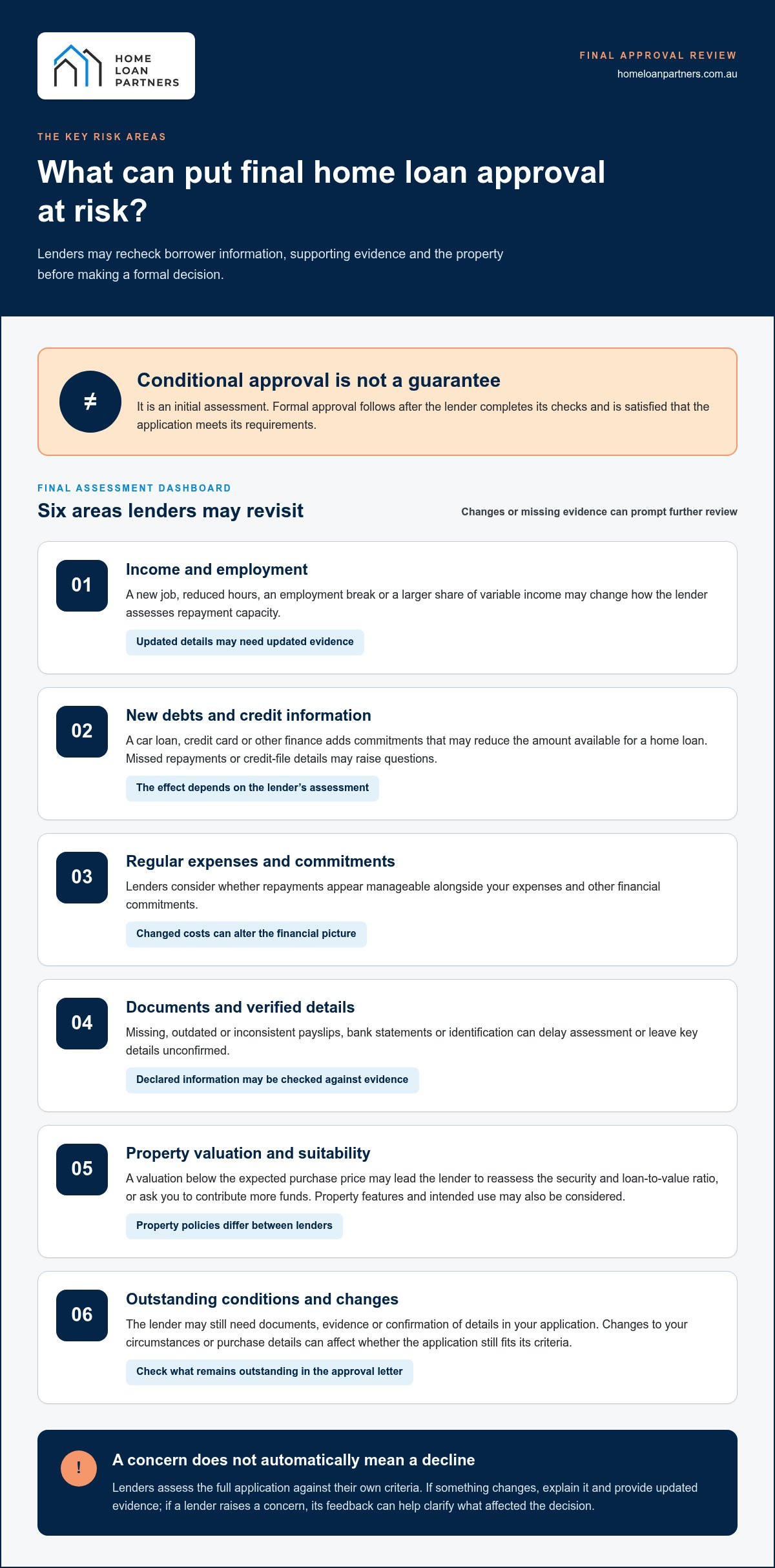
The common reasons for mortgage rejection at final approval often involve a change in information the lender assessed earlier, or a detail that needs further evidence. A new job, additional debt, incomplete paperwork or a valuation below expectations may prompt a closer review. None automatically means a loan will be declined: the lender considers the full application against its own criteria.
How can changes to income, debts, or credit affect approval?
A lender may reassess your ability to manage repayments if your work or income changes. Starting a new job, reducing your hours, taking an employment break or earning a larger share of variable income can affect how the lender views your income, depending on its assessment approach. If your situation changes, explain it and provide updated evidence rather than relying on figures supplied earlier.
New liabilities can change the assessment too. A car loan, credit card or other finance adds commitments that may reduce the amount available for a home loan. Missed repayments or credit-file information may raise questions, but reporting details and lender interpretation vary. One item doesn’t guarantee a decline; its effect depends on the lender’s assessment of your circumstances.
Changes to regular expenses may matter because lenders consider whether repayments appear manageable alongside your commitments. For general guidance on possible rejection reasons and next steps, see the Australian Government’s What to do if your loan is rejected resource.
How can documents, valuation, or the property cause a decline?
Documents help the lender verify what you declared. Missing, outdated or inconsistent payslips, bank statements or identification can delay assessment or leave the lender unable to confirm key details. Differences between declared and verified income, expenses or liabilities may also lead to follow-up questions. Check that documents are current, complete and consistent before submitting them.
The property is part of the assessment too. If a valuation comes in below the expected purchase price, the lender may reassess the security and loan-to-value ratio, or ask you to contribute more funds. The property’s features or intended use may also be considered against that lender’s policy. Requirements differ, so a concern for one lender won’t necessarily produce the same result elsewhere.
At final assessment, a lender may revisit both your capacity to repay and the property’s suitability as security. If a change or request has left you unsure what to do, a broker can help you understand the lender’s feedback and how it may affect your application. Get guidance on your home loan application.
What do lenders recheck before giving final mortgage approval?
Conditional approval can reduce uncertainty by showing that your application appears workable based on the information available. It doesn’t remove the lender’s final checks. Before formal approval, a lender may confirm that the borrower, property and proposed loan still meet its criteria. Checks differ, so the examples below are possibilities rather than a universal checklist.
| Assessment area | What the lender may verify, depending on its process |
|---|---|
| Borrower | Income and employment evidence, declared expenses and liabilities, updated bank statements, and relevant credit-file information. |
| Property | Valuation, property details and whether the property is acceptable security under the lender’s criteria. |
| Loan structure | Requested loan amount, deposit, repayment arrangement and the loan-to-value ratio (LVR), which compares the loan with the property’s value. |
| Outstanding conditions | Whether requested documents, confirmations or other approval conditions have been provided and accepted. |
Borrower checks: income, expenses, debts and credit information
A lender may compare your documents with the income, liabilities and living expenses recorded in your application. For example, it could seek updated evidence if your income has changed or ask about a transaction that doesn’t match what you declared. Credit-file information may also be reviewed, but lenders can interpret it differently. There’s no single score or item that guarantees approval or rejection across all lenders.
Property and loan checks: valuation, conditions and lending limits
The lender may consider whether the property’s valuation supports the proposed loan and provides suitable security. If the valuation is lower than expected, the LVR may rise because the loan is larger relative to the property’s assessed value. Depending on the lender’s limits and your circumstances, this could affect the deposit required, the loan amount or whether lender mortgage insurance (LMI) is relevant. A lower valuation doesn’t automatically mean the application will be declined.
Keep track of every condition on your approval, including documents or confirmations the lender has requested. A broker can help you understand which checks are outstanding and how a change to your circumstances or loan structure may affect the application. These borrower, property and loan considerations also help explain the common reasons for mortgage rejection at final approval, although the lender’s decision still depends on the full application.
How to reduce the risk of mortgage rejection before settlement
You can’t control every lender decision, but steady communication and organised paperwork can make it easier to address questions while your application is being assessed. Use this checklist between conditional approval and settlement:
- 1. Disclose changes promptly. Tell your broker or application contact if your job, income, expenses, debts or purchase details change. Don’t assume a change is too small to mention.
- 2. Pause before taking on new credit. A new loan, credit card or major purchase may affect your liabilities or available funds. Discuss the possible application impact before making a commitment.
- 3. Keep repayments on track. Missed repayments may prompt further questions during assessment. Keep records of payments and tell your broker or application contact if an issue arises.
- 4. Send clear, current evidence. Provide the documents requested, such as updated income evidence or bank statements. Check that files are complete and details are consistent with your application.
- 5. Track every outstanding condition. Keep a list of what’s been requested, what you’ve supplied and what still needs attention. Respond clearly and promptly so the lender can review any questions.
What should you avoid after conditional approval?
Avoid applying for new credit, taking on car finance or making large purchases without first discussing how they could affect your application. Continue meeting your existing repayments and don’t conceal changes to your circumstances. If something changes, share accurate details through your broker or application contact and keep a record of what you’ve provided. These steps can help resolve questions, but they can’t guarantee approval.
If you’re still planning your budget, this borrowing power calculator guide can help you explore your borrowing position. Treat a calculator as a planning tool, not a lender’s approval or a prediction of the final decision.
What documents and conditions should you keep organised?
Keep current income evidence, bank statements, identification and any other requested supporting documents accessible. Re-read your approval conditions so you know what remains outstanding, and tell your broker or application contact about relevant changes as soon as possible. A mortgage broker can help explain application steps and lender feedback; see this finance broker guide for more on broker support.
Staying organised may help you respond to some of the common reasons for mortgage rejection at final approval, such as missing evidence or undisclosed changes. For personalised guidance on your application, discuss your home loan options.
What to Do if Your Mortgage Is Declined at Final Approval
A decline can be upsetting, especially if you’re close to settlement. Before making another application, get a clear picture of what happened. One lender’s decision doesn’t mean every lender will reach the same outcome, but applying again without understanding the issue may add uncertainty.
How should you understand the lender’s decision?
Ask your broker to help clarify the reason for the decline and identify any unmet condition, missing evidence or information that affected the assessment. Where possible, request the explanation in writing so you can refer to the details as you consider next steps.
Then separate issues that may be addressed with updated documents from changes that could need more time or a revised loan structure. For example, supplying a missing statement may resolve an evidence gap, while a change to income or existing debt may require a broader reassessment. Don’t assume how a declined application or credit enquiry will appear on your credit file. Reporting and lender records can differ, so clarify what applies to your situation before submitting another application.
When can a broker help reassess your options?
A broker can review your application, current circumstances and the lender’s feedback with you. The aim is to understand whether the concern can be resolved, whether the application needs adjustment, or whether another lender may assess it differently. The Home Loan Partners has access to a panel of more than 36 lenders, which can help compare suitable options. This doesn’t guarantee approval, and each lender will assess your circumstances against its own criteria.
Before applying again, take a measured approach:
- Clarify the decision. Identify the specific issue, condition or evidence that led to the decline.
- Check the information. Correct any errors and gather documents that address the lender’s questions.
- Review your circumstances. Consider whether income, debts, expenses or the loan structure need attention before another assessment.
- Consider timing. Discuss whether it makes sense to reapply now or wait until a change can be clearly demonstrated.
The common reasons for mortgage rejection at final approval can affect borrowers differently, so a calm review is more useful than rushing into multiple applications. If you’d like support understanding the lender’s feedback and considering your next steps, talk through your home loan options.
Take your next step with a clearer plan
Conditional approval is a useful step, but it isn’t a guarantee of formal approval. Before settlement, keep your information accurate, respond to document requests and discuss changes to your income, debts or purchase details promptly. These practical steps can help you address potential concerns, though the lender makes its decision based on your full circumstances.
Understanding the common reasons for mortgage rejection at final approval can help you respond thoughtfully if a lender declines your application. Find out what affected the decision, identify what can be resolved and review your options before applying elsewhere. One lender’s decision doesn’t necessarily determine the outcome with another.
The Home Loan Partners offers personalised mortgage guidance to borrowers across Australia, with access to a panel of more than 36 lenders. If you’d like support understanding lender feedback or considering suitable next steps, Talk through your home loan options with our team.
A setback can be difficult, but a clear assessment can help you move forward with greater confidence.
Frequently Asked Questions
Can a mortgage be rejected after conditional approval?
Yes, a lender can decline a mortgage after conditional approval because that approval is generally subject to conditions and further checks. Before making a final decision, the lender may verify your income, debts, documents, credit information and property details. The exact process depends on the lender and your application. Check your written approval conditions, note any outstanding requirements and respond promptly to document requests.
What is the most common reason a mortgage is declined at final approval?
There isn’t one reason that applies to every borrower. Common reasons for mortgage rejection at final approval can include changed income or employment, new debts, credit concerns, incomplete or inconsistent documents, a lower-than-expected valuation, or a property that doesn’t meet the lender’s criteria. The lender considers the full application, so one issue doesn’t automatically determine the outcome. Ask your broker to help clarify the specific concern behind the decision.
Can changing jobs affect mortgage approval before settlement?
Yes, a job change can lead the lender to reassess your income and employment circumstances. A new role, probation period, move from salaried to contract work, employment gap or reduction in income may affect how the lender views income stability and affordability. Requirements vary by lender and situation. Tell your broker or application contact about a material change and provide any evidence requested rather than assuming the earlier assessment still applies.
Can a low property valuation cause final mortgage approval to be declined?
It may affect the lender’s assessment because the property is part of the loan security. If the valuation is lower than expected, the loan-to-value ratio or your required contribution may change. The lender could ask for more information or consider a revised loan structure. The outcome depends on the valuation, loan details and lender policy. A lower valuation doesn’t always mean an automatic decline.
Does a mortgage rejection affect your credit score in Australia?
A declined application isn’t necessarily recorded as a separate event on your credit file, but a credit enquiry associated with the application may appear. Any effect depends on the information reported and the scoring model used. Don’t assume how a decision has affected your file or make repeated applications without understanding the circumstances. Ask your broker to help clarify what was recorded and review your credit report if you need to check the information.
Should I apply with another lender after my mortgage is declined?
Possibly, but first find out why the application was declined. Some concerns may relate to a lender’s criteria, while issues such as incorrect documents, reduced income or increased debts could affect another assessment too. Review the decision, correct errors or address the underlying concern, then consider timing before applying again. A mortgage broker can help compare options across lenders, but another lender’s approval can’t be guaranteed.
What should I do if my lender requests more documents before final approval?
Read the request carefully, check what information and date range it covers, then provide complete and consistent documents through the requested channel. If something has changed or a document isn’t available, explain this clearly instead of leaving a gap. Keep copies of what you submit and track any conditions that remain outstanding. A prompt response can help the lender assess your application, but it doesn’t guarantee approval.