

What if unconditional loan approval still doesn’t mean the property is yours? If you’re asking what happens after unconditional loan approval, the key distinction is that your lender’s decision relates to finance, while your signed contract governs the property purchase. That gap can feel unsettling, especially as settlement approaches and you’re unsure whether the seller can consider another offer.
Approval is a major step, but there are still tasks to complete. You may need to sign and return loan documents, respond to lender requests, coordinate with your conveyancer and prepare for settlement. Your position with the seller also depends on the contract stage and its terms, including any subject-to-finance or 48-hour clause.
This guide walks through the steps from approval to settlement, the deadlines to track and how your contract may affect your position if another offer comes along. It also explains how a mortgage broker can help with lending questions and communication as settlement approaches.
Key Takeaways
- Understand what happens after unconditional loan approval, from completing lender requirements to preparing for settlement.
- Keep finance approval and the property contract separate: approval alone doesn’t reserve the property or bind the seller.
- Prioritise contract deadlines and lender requests so essential steps don’t get lost among other tasks.
- Check how your contract’s terms may affect your position if the seller receives another offer.
- A mortgage broker can help clarify lending steps and coordinate communication as settlement approaches.
What does unconditional loan approval mean for your property purchase?
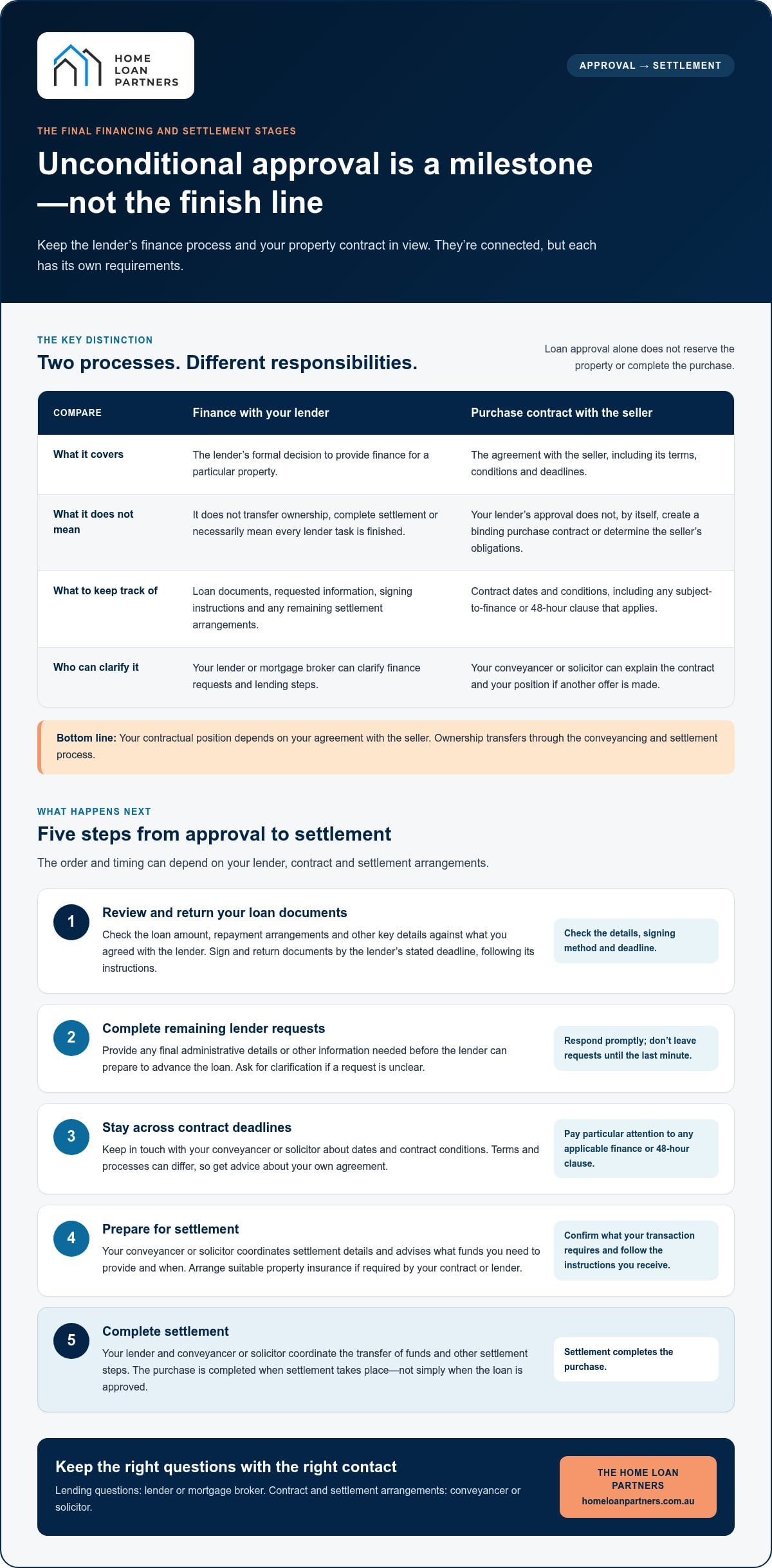
In plain English, unconditional loan approval is a lender’s formal decision to provide finance for a particular property, based on its assessment of your application and the information available. It’s a significant step, but it doesn’t transfer ownership, complete the purchase or mean settlement has occurred. Your loan still needs to move through the lender’s documentation and settlement process.
When working out what happens after unconditional loan approval, keep two processes in view: your finance arrangement with the lender and your purchase contract with the seller. They’re connected, but approval for one doesn’t replace the requirements of the other.
Unconditional approval versus pre-approval: what changes?
Pre-approval, sometimes called conditional approval, is an early indication of how much a lender may be willing to lend. It’s generally based on the information available at that stage and isn’t the same as a final decision for a specific property. With unconditional approval, the lender has assessed your application and supporting information and made a formal decision about the loan for the property.
The lender’s assessment may consider your financial position and details of the property. The precise meaning of “unconditional” and any remaining steps vary by lender. You may still need to review, sign and return loan documents, provide requested information or follow lender instructions before funds can be advanced.
Does unconditional approval mean the home is yours?
No. Loan approval relates to your finance. It doesn’t, by itself, reserve the property or create a binding purchase contract. Your contractual position depends on the agreement with the seller, while ownership transfers through the conveyancing and settlement process. The conveyancing process in Australia covers the legal transfer of property from seller to buyer, including the steps leading to settlement.
A seller’s obligations aren’t determined by your lender’s approval alone. Whether a contract has been formed, and what its terms mean for you, are separate questions. If you’re unsure whether your agreement is binding or what happens if another offer is made, ask your conveyancer or solicitor to explain the contract and your position.
Think of approval as a key finance milestone, not the finish line. Once you understand what your lender has approved and what your contract requires, you can focus on the remaining documents, deadlines and settlement arrangements.
What happens after unconditional loan approval: the steps before settlement
Approval moves your purchase into its final financing and settlement stages, but the order and timing depend on your lender, contract and settlement arrangements. The usual sequence is to review and return loan documents, complete lender requests, coordinate funds and settlement details, then settle on the date agreed under the contract.
- Review your loan documents. Check the loan amount, repayment arrangements and other key details against what you agreed with the lender. Sign and return the documents by the lender’s stated deadline, following its signing instructions.
- Complete any remaining lender requests. Your lender may need final administrative details or other settlement arrangements completed before it can prepare to advance the loan. Respond promptly, and ask for clarification if a document or request isn’t clear.
- Stay across contract deadlines. Keep in touch with your conveyancer or solicitor about dates and any conditions in your contract. The official offer and acceptance process includes examples of finance clauses and 48-hour clauses. Contract terms and processes can differ across Australia, so rely on advice about your own agreement.
- Prepare for settlement. Your conveyancer or solicitor coordinates settlement details with the relevant parties and advises what funds you need to provide and when. Arrange suitable property insurance if required by your contract or lender, and follow the instructions you receive.
- Complete settlement. Your lender and conveyancer or solicitor coordinate the transfer of funds and other settlement steps. The purchase is completed when settlement takes place, not simply when your loan is approved.
Loan documents, conditions and lender checks
Read the lender’s instructions carefully before signing. Check whether documents need to be returned in a particular way or whether you need to provide additional information. Don’t leave requests until the last minute: a missing signature or unanswered question can affect the arrangements. If something doesn’t make sense, contact the lender or your mortgage broker promptly to clarify what action is needed.
Preparing for settlement day
Your conveyancer or solicitor is your key contact for contract-related settlement arrangements, including the funds required from you. The settlement date is guided by your contract and the lender’s arrangements, so don’t assume every purchase follows the same timetable. Keep your documents accessible, respond to requests and confirm with your conveyancer or solicitor what’s required for your transaction.
For support understanding lender requests and coordinating the finance steps, personalised mortgage guidance can help make the process clearer.
Can the seller accept another offer after you have finance approval?
Yes, a seller may be able to consider or accept another offer if your purchase hasn’t reached the point of a binding contract. Unconditional finance approval is a decision by your lender, not acceptance of your offer by the seller. Your position depends on the property contract and the steps taken to form it.
Before a binding contract exists, what can happen?
If the sale contract hasn’t become binding, the seller may continue considering offers, even if your loan is approved or you believe your offer has been accepted verbally. The legal effect of an offer and the point at which a contract forms can depend on the state or territory and the circumstances. Signing and exchange processes aren’t identical across Australia. Property Update’s overview of the offer and acceptance process discusses these differences, including the risk commonly called gazumping.
If you haven’t completed the contract process, contact your conveyancer or solicitor promptly. They can explain what has been signed or exchanged, whether the agreement is binding and which actions or deadlines matter next. Don’t assume lender approval alone will hold the property for you.
After the contract becomes binding, does approval protect the purchase?
Once a binding contract exists, the sale is generally governed by its terms. That creates contractual obligations for both parties, but it doesn’t mean unconditional loan approval itself protects the purchase. The contract may include conditions or clauses that affect what can happen. A seller’s response to another offer must be considered in light of the agreement and applicable rules.
Cooling-off rights, termination options and the procedures for forming a contract vary by jurisdiction and individual circumstances. Some contracts may also contain clauses that affect a buyer’s position if the seller receives another offer. Don’t rely on a general explanation to decide whether you can withdraw, must proceed or have extra time to arrange finance. Ask your conveyancer or solicitor to interpret the terms of your specific contract.
This distinction is central to understanding what happens after unconditional loan approval: the lender’s decision progresses the finance, while the contract determines your rights and obligations in the purchase. If you’re unsure where you stand, get contract-specific guidance promptly and keep your lender and conveyancer informed of any changes that could affect settlement.
Your post-approval checklist: keep the purchase moving towards settlement
A short, organised checklist can help you stay on top of the tasks that matter after approval. Your contract and lender set the deadlines, so use the dates they confirm rather than assuming every purchase follows the same timetable.
Documents, funds and deadlines to keep track of
- Prioritise contract dates and lender requests. Record each deadline confirmed by your conveyancer or solicitor and lender. Return requested documents by the stated date, and follow up promptly if you’re unsure what’s needed.
- Keep key records together. Save signed loan documents, identity records, lender communications and copies of anything you submit. A clearly labelled digital folder can make it easier to find details when a question comes up.
- Confirm settlement funds and payment arrangements. Ask your conveyancer or solicitor what funds you need to provide, how they should be paid and by when. Don’t rely on estimates or assumptions when planning the transfer.
- Keep your support team updated. Tell your broker, lender and conveyancer about relevant changes or delays, especially if they could affect loan arrangements, contract dates or settlement preparations. Share updates with the people who need them rather than assuming everyone has the latest information.
Changes to disclose before settlement
Your lender approved your application using the information it assessed. A material change before settlement could affect how it views your circumstances, so let the lender know promptly if your income, employment, debts or other relevant circumstances change. If you’re uncertain whether a change matters, raise it with your lender or broker rather than waiting.
Be cautious about taking on new credit before settlement. A new loan or credit commitment may affect your financial position, so speak with your lender or broker before making a decision that could change your circumstances.
Keep your lender informed: disclose material changes before settlement rather than assuming unconditional approval means they no longer matter. If a document is delayed, you spot an issue with a payment or a settlement date may be affected, contact the relevant lender and your conveyancer or solicitor promptly. Early communication gives the people coordinating your purchase a clearer chance to explain the next step.
Information about the finance steps and lender requests is available through home loan guidance.
How a mortgage broker can guide you from approval to settlement
Unconditional approval is a major milestone, but lender instructions, loan documents and settlement arrangements can still leave you wondering what to do next. A mortgage broker can help make finance-related steps clearer, explain lender communications in practical terms and identify what needs attention as settlement approaches.
The Home Loan Partners provides personalised mortgage guidance to Australian borrowers, with access to a panel of more than 36 lenders. The panel helps with finding and arranging finance, but it doesn’t guarantee a particular approval or settlement outcome. Support is tailored to your circumstances and the lender involved.
What support can a broker provide after approval?
Your broker can help you understand what a lender is asking for, identify the next financing actions and clarify who needs to respond. If a request is unclear, they can help you frame the right questions and coordinate lending-related communication between you and the lender. This can be useful when several documents or dates need your attention at once.
A broker’s role is distinct from your conveyancer’s or solicitor’s. Your broker can guide you through loan and lender matters; your conveyancer or solicitor handles legal and contract advice and coordinates the legal aspects of settlement. Keeping each professional informed helps direct finance questions and contract questions to the right person.
When to ask for guidance before settlement
Seek guidance if you’re unsure how to respond to a lender request, what a finance-related deadline means or which lending step comes next. It’s also sensible to raise a change in your financial circumstances or a possible delay early, rather than waiting until it affects settlement arrangements. Your broker can help you understand the finance implications and next action, while your conveyancer or solicitor advises on contract matters.
Understanding what happens after unconditional loan approval is easier when you know who to contact and what each person can help with. You don’t need to interpret every lender message alone. The Home Loan Partners can help clarify your finance steps and explain the support available for your circumstances.
Take your next steps towards settlement with confidence
Unconditional approval is an important finance milestone, but it doesn’t secure the property by itself. Your contract determines your position with the seller, while your lender’s requirements and settlement arrangements shape the steps still ahead.
Keep loan documents, lender requests and contract deadlines organised, and speak up promptly if your circumstances change or something is unclear. Knowing what happens after unconditional loan approval can help you focus on the right actions without assuming every purchase follows the same timeline.
A mortgage broker can help clarify finance requests and coordinate lending questions as you move towards settlement. The Home Loan Partners offers personalised mortgage guidance to borrowers across Australia, with access to a panel of more than 36 lenders. Talk with our team about your next home loan steps.
Clear communication and the right people guiding each part of the process can help you approach the next stage feeling more prepared and confident.
Frequently Asked Questions
What happens after unconditional loan approval?
After unconditional loan approval, you’ll usually complete the lender’s loan documents and any remaining requests, then coordinate finance and settlement arrangements with your lender and conveyancer or solicitor. If you’re asking what happens after unconditional loan approval, start by checking the lender’s instructions and your contract deadlines. The exact steps and timing vary by lender, contract and state or territory, so follow the dates confirmed for your purchase.
Can a seller accept another offer after my home loan is approved?
Possibly, particularly if a binding contract of sale hasn’t been formed. Your finance approval is between you and your lender; it doesn’t accept your offer or reserve the property. If a binding contract is already in place, the seller’s obligations generally depend on its terms and relevant local rules. Ask your conveyancer or solicitor to explain your contract status and what it means if another offer is made.
Does unconditional loan approval mean my mortgage is final?
It means your lender has formally approved finance for the property, but the purchase and loan aren’t complete until the remaining documentation and settlement steps are finished. You may still need to sign and return loan documents, meet lender instructions and prepare for funds to be advanced at settlement. Check the approval letter and lender communications for outstanding actions. If a condition or request is unclear, contact your lender or mortgage broker for clarification.
How long after unconditional approval does settlement take?
There’s no universal period between approval and settlement. Australian property settlement periods are commonly 30, 60 or 90 days, but the date for your purchase is set by the contract and depends on the arrangements between your lender and conveyancer or solicitor. Unconditional approval may arrive at different points in that timeframe. Confirm the agreed settlement date and any important deadlines with your conveyancer, then check that your lender’s requirements can be completed in time.
Can my loan be affected after unconditional approval?
It’s possible for a change in your circumstances or an incomplete lender request to affect finance arrangements before settlement. Tell your lender promptly if your income, employment, debts or other relevant details change. Before taking on new credit, discuss the potential effect with your lender or broker. Keep responding to lender instructions, and raise any delays early. Approval is an important milestone, but settlement still depends on completing the required steps.
What should I do if the seller receives a higher offer?
Stay calm and contact your conveyancer or solicitor to clarify whether a binding contract exists and what your contract says about the situation. Don’t assume your loan approval secures the property, and avoid making a rushed decision about changing your offer. If your offer or contract position changes, update your mortgage broker and lender where relevant. Your conveyancer or solicitor can provide advice based on your agreement and the rules that apply where the property is located.
Do I need a conveyancer after unconditional loan approval?
A conveyancer or solicitor can manage the legal and contract-related steps between approval and settlement, including coordinating settlement details and explaining your obligations under the contract. Their advice is separate from a mortgage broker’s guidance on lender requests and finance steps. The process and requirements vary across Australia, so speak with your conveyancer or solicitor about your purchase and any deadlines. They can clarify what needs to happen before settlement is completed.