

Could one credit-file default decide whether you get a home loan? It can make approval more difficult, but it doesn’t automatically mean a lender will decline your application. The home loan implications of a default on credit file depend on details such as whether it’s paid, how recent it is and how the rest of your finances look.
It’s understandable to feel unsure about applying, especially if you don’t know whether a listing is accurate or worry about how an application could affect your credit position. A paid default is viewed differently from an unpaid one, but paying it doesn’t remove the listing straight away. It can remain on your report for five years from the date it was listed.
This guide explains what lenders may consider, how paid, unpaid and incorrect defaults can affect an application, and how to check your credit information. It also sets out practical steps to take before applying, including when it may make sense to pause and get guidance. The aim is to help you understand your options and prepare carefully, without assuming the same outcome applies to every borrower.
Key Takeaways
- The home loan implications of a default on credit file depend on more than the listing alone. Lenders may assess your wider finances and the loan details.
- Compare applying now with correcting a possible reporting error or taking time to prepare your application.
- Check your credit reports carefully. If something appears inaccurate, gather evidence and contact the credit provider and reporting body.
- Lenders may assess applications differently, so understand your options before deciding what to do next.
- A mortgage broker can help you organise your circumstances and explore options across The Home Loan Partners’ panel of over 36 lenders, without guaranteeing approval.
What a Credit-File Default Means for an Australian Home Loan
A credit default is a record a credit provider reports after a debt has remained unpaid and meets the applicable reporting requirements. In general finance, default means failing to meet an obligation. A financial default on a credit report is a specific entry that mortgage lenders may consider when assessing how you’ve managed credit.
A credit-file default can influence a home-loan assessment, but it doesn’t automatically prevent approval. The home loan implications of a default on credit file depend on the entry and how it fits with the rest of your application.
How a default may appear on your credit report
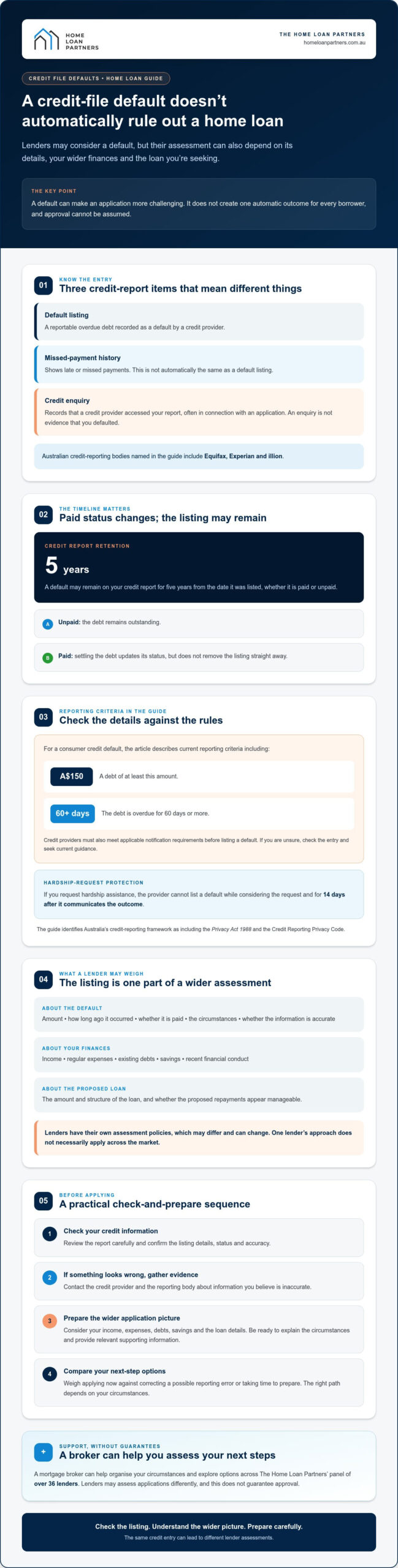
Australian credit-reporting bodies, including Equifax, Experian and illion, may hold information supplied by credit providers. Your report can include several types of information, and they don’t all mean the same thing:
- Default listing: A reportable overdue debt recorded as a default by a credit provider.
- Missed-payment history: Repayment information showing late or missed payments. This isn’t automatically the same as a default listing.
- Credit enquiry: A record that a credit provider accessed your report, often in connection with an application. An enquiry isn’t evidence that you defaulted.
A default may be marked unpaid if the debt remains outstanding, or paid after it’s settled. Payment updates the status, but doesn’t erase the listing straight away. Under the current retention rule, a default remains on a credit report for five years from the date it was listed, whether paid or unpaid.
Which Australian rules and timelines should borrowers know?
Australia’s credit-reporting framework includes the Privacy Act 1988 and the Credit Reporting Privacy Code. For a consumer credit default, current reporting criteria include a debt of at least A$150 that is 60 days or more overdue. Credit providers must also meet applicable notification requirements before listing a default. If you’re unsure whether those steps were followed, check the entry and seek current guidance before relying on it.
There are also protections around hardship requests. If you request hardship assistance from a credit provider, it can’t list a default while considering the request and for 14 days after it communicates the outcome.
These are credit-reporting rules, not a promise of how a lender will assess your application. A lender’s policies may consider the default’s status and other application details, so the same entry can lead to different outcomes. Before applying, confirm the listing details and current reporting requirements, then weigh your circumstances and lender options carefully.
Does a Default Automatically Stop You Getting a Home Loan?
No. A default can make a home-loan application more challenging, but it doesn’t create one automatic outcome for every borrower. Lenders have their own assessment policies and consider a credit entry alongside the full application. That means the home loan implications of a default on credit file can vary, even when two applicants have similar-looking listings.
A lender may assess your income, regular expenses, existing debts, savings, and the amount and structure of the loan you’re seeking. For example, a default may be one concern if other commitments already put pressure on your budget. A stronger overall financial position may provide a different context, but it still can’t guarantee approval.
What details about the default may matter to a lender?
Potential considerations include the amount, how long ago the default occurred, whether it’s paid, the circumstances behind it and whether the information is accurate. Lenders may also consider your recent financial conduct and whether the proposed repayments appear manageable. Their policies differ and can change, so don’t assume one lender’s approach applies across the market. The Australian credit reporting regulations explain rights and responsibilities around credit information, including how to address information you believe is wrong.
Prepare to explain the circumstances clearly and provide relevant supporting information. The assessment isn’t just about the entry: your income, expenses, debts, savings and loan details all help shape the lender’s view of your application.
Can a paid or older default still affect an application?
Paying a debt may change the listing’s status to paid, but it doesn’t necessarily remove it from your credit report. That’s separate from how a lender interprets the entry. One lender may take account of the fact that it’s been settled, while another may apply different criteria. A paid status or older date doesn’t, by itself, guarantee acceptance.
Check that the report shows the correct status and dates. If the entry appears inaccurate, focus on resolving that issue before deciding whether to apply. If it’s accurate, consider how it sits alongside the rest of your finances and whether you’re ready to proceed. A mortgage broker can help you understand possible lender criteria. The Home Loan Partners has a panel of over 36 lenders, though each lender makes its own assessment.
Once you’ve reviewed your credit information, you can discuss your home-loan options with The Home Loan Partners and consider a next step that fits your circumstances.
Compare Your Options Before Applying for a Home Loan
A default doesn’t point to one obvious next step. Depending on your credit report, finances and plans, you might apply now, resolve a reporting concern first or take time to prepare your application. The home loan implications of a default on credit file can vary by lender, so weigh the likely benefits and drawbacks before deciding.
Apply now or prepare first?
Start by checking your report and gathering documents that show your current financial position. This can help you spot incorrect details and prepare to explain an accurate listing. Consider these pathways:
- Apply now: This may suit a time-sensitive purchase, but first understand which lender’s criteria could fit your circumstances. An application doesn’t guarantee approval.
- Address a report issue first: If a default appears wrong or its status is outdated, gather relevant evidence and contact the credit provider and reporting body. Clarifying the record can help you make a more informed decision about timing.
- Prepare further: If your budget is under pressure, take time to review spending, reduce debts where practical or build savings. These steps may help strengthen the overall application. Whether waiting is worthwhile depends on your goals and circumstances.
A purchase deadline matters, but it shouldn’t be the only factor. Before choosing whether to proceed or pause, consider your income, expenses, savings, debts, deposit and the loan you need.
How lender pathways can differ
Your current lender may assess a request under its own policies. Another mainstream lender may take a different view, while a specialist lender may consider applications that don’t fit some mainstream criteria. Specialist options aren’t necessarily suitable or available to every borrower, and eligibility still depends on the lender’s assessment.
Look beyond whether you may qualify. Compare the interest rate, fees, features and conditions, and consider whether repayments are manageable over time. If you’re considering refinancing, review the costs and potential benefits alongside eligibility. The guide Home Loan Refinancing: A Complete 2026 Guide offers further context on refinance considerations.
A finance broker can help organise your circumstances and compare lender criteria, but can’t promise an outcome. For more on what to consider when working with one, see The Ultimate Guide to Hiring a Finance Broker in Australia. A considered comparison can help you choose a pathway that fits your needs instead of applying broadly and hoping for the best.
What to Do Before Applying: Check, Correct, and Prepare
Before making a home-loan application, work through your credit information in a clear order. This helps you distinguish an accurate listing from a reporting mistake or a possible identity concern, and gives you a firmer basis for deciding what to do next. The home loan implications of a default on credit file are easier to assess when you know what your report actually says.
How to review and challenge inaccurate information
- Obtain your credit reports. Check reports from the Australian credit-reporting bodies, as the information may not be identical across them.
- Review each detail. Check your name and identifying information, the account and credit provider, relevant dates, the amount, and whether the listing is shown as paid or unpaid. Confirm whether you recognise the account and whether the information matches your records.
- Gather evidence. Keep copies of the reports, statements, payment records and relevant correspondence. If you believe the entry is incorrect or linked to identity misuse, note why and collect documents that support your concern. Don’t assume an unfamiliar entry is automatically an error, but don’t ignore it either.
- Raise the concern. Contact the credit provider that supplied the information and the reporting body displaying it. Explain the specific detail you believe is wrong and provide copies of supporting evidence. Keep a record of your request and any response or outcome.
If the issue isn’t resolved, check the current dispute and complaint steps set out by the relevant reporting body and the Office of the Australian Information Commissioner. Processes can change, so follow current official guidance rather than relying on an old checklist. These steps help you raise the issue; they don’t determine whether a listing is legally valid.
Prepare a stronger, clearer application
Once you’ve checked the report, assemble an accurate picture of your finances. Include income, regular expenses, debts and credit limits, savings, and details of your repayment history. Make sure the information you provide is consistent and complete. Undisclosed liabilities or conflicting figures can make it harder for a lender to assess your application and understand your capacity to meet repayments.
For an initial repayment estimate, refer to Home Loan Calculator Guide: Planning Your Australian Property Journey in 2026. A calculator can help with planning, but it won’t confirm what a lender will approve. After reviewing your records and finances, discuss your home-loan options with The Home Loan Partners to consider possible next steps based on your circumstances.
How a Mortgage Broker Can Help You Assess Your Next Steps
A default can make it harder to know which lender to approach and what to prepare. A mortgage broker can help organise the details of your situation, explain lender criteria and explore options that may be worth considering. The home loan implications of a default on credit file depend on both the listing and your wider application, so guidance should reflect your circumstances rather than rely on a general rule.
The Home Loan Partners has access to a panel of over 36 lenders. This allows different lender policies to be compared, but it doesn’t mean every lender will consider or accept an application. Lending criteria can vary and change, and each lender makes its own assessment.
What information to bring to an initial conversation
Having relevant information ready can make it easier to discuss your position clearly. Consider bringing:
- Your recent credit reports, including the report showing the default.
- Correspondence about the debt, any payment records, and details of a dispute or correction request.
- Current income information, regular expenses, savings, and details of existing debts and credit limits.
Be clear about whether the default is paid, still outstanding or disputed. If you believe the listing is incorrect, explain what you’ve checked and share supporting information. An initial discussion can help identify questions and possible pathways, but it isn’t a guarantee of approval or a lender decision.
Plan a considered path toward a home loan
After reviewing your information, possible next steps may include correcting a report error, clarifying which lender policies may fit your circumstances, or taking time to improve your application readiness. If you already have a home loan and are considering changing lenders, refinancing may be relevant. Weigh eligibility alongside potential costs and benefits before deciding.
The right sequence depends on your goals, financial position and any deadlines. A considered assessment can help you avoid repeated or uninformed applications while keeping your longer-term plans in view.
If you’ve checked your credit information and want to explore possible next steps, discuss your home loan options with our team. Bring your questions and relevant records to work through potential lender pathways without assuming a particular outcome.
Take a Clear Next Step Toward Your Home Loan
A credit-file default doesn’t automatically rule out a home loan. Its effect depends on the listing details, the lender’s current criteria and your wider financial position. Understanding the home loan implications of a default on credit file starts with checking your reports, addressing information you believe is inaccurate and preparing a clear picture of your income, expenses, debts and savings.
You don’t have to work through lender options alone. The Home Loan Partners offers personalised guidance based on your circumstances and goals, with access to a panel of over 36 lenders. The team serves clients nationally, but each lender assesses applications under its own policies, so approval can’t be guaranteed.
If you’ve reviewed your credit information and are ready to explore possible pathways, talk through your home loan options with our team. A considered conversation can help you decide what to clarify, prepare or pursue next.
Frequently Asked Questions
Can I get a home loan with a default on my credit file?
Yes, it may be possible, but a default can make approval more challenging. Lenders consider the listing alongside your income, expenses, debts, savings and loan details, and their assessment policies differ. The home loan implications of a default on credit file depend on your whole application, not just the entry. Check your report and prepare relevant information before applying rather than assuming you’ll be automatically declined or approved.
How long does a default stay on your credit file in Australia?
A default generally remains on your Australian credit report for five years from the date it was listed, whether it’s paid or unpaid. It should then be removed under the retention rules. Check the listing date on your report and compare it across reporting bodies if needed. If the entry appears to remain beyond the applicable period, contact the credit-reporting body and ask it to review the information.
Does paying a default remove it from your credit report?
No. Paying the debt generally changes the listing’s status to paid, but doesn’t immediately remove the default. It can remain on your report for five years from the date it was listed. A paid default may be viewed differently from an unpaid one, but each lender applies its own assessment criteria. Check that the status is correctly updated and keep evidence of payment in case you need to query the report.
Will a default affect my ability to refinance my home loan?
It can affect a refinance application because the new lender will assess your credit information alongside your income, expenses, debts, savings and loan details. A default doesn’t automatically rule out refinancing, but eligibility depends on the lender’s current policies and your overall circumstances. Before applying, check the listing’s accuracy and compare potential loan costs, features and conditions with your existing arrangement. A refinance assessment isn’t a guarantee of approval.
How can I dispute an incorrect default on my credit file?
Review your credit report and identify exactly what appears inaccurate, such as the account, dates, payment status or whether you recognise the debt. Gather supporting records, then contact the credit provider that supplied the information and the reporting body showing the listing. Keep copies of your request and their responses. If the issue remains unresolved, check the current complaint and correction pathways with the reporting body and the Office of the Australian Information Commissioner.
Do all Australian lenders assess defaults in the same way?
No. Lenders have different policies and may weigh factors such as the default’s amount, age, paid status and circumstances alongside your wider financial position and proposed loan. Policies can also change, so an outcome from one lender doesn’t predict another’s decision. Before applying, compare lender eligibility criteria as well as rates, fees, features and conditions. A mortgage broker can help you explore options, but can’t guarantee that a lender will accept an application.