

Could rent you haven’t received yet help you buy an investment property? Using future rental income for a new purchase may support your borrowing plan, but a lender’s decision depends on the evidence you provide and how that lender assesses the estimate. An optimistic rent figure may not carry the weight you expect.
It’s understandable to want a clear answer before making an offer. Some lenders may consider proposed rent supported by a rental appraisal from a licensed real estate agent or an estimate from an independent valuer. They may also discount the figure when assessing your ability to meet repayments, so the same property and estimate can be treated differently by different lenders.
This guide explains what lenders may count as future rental income, which documents can support a realistic estimate, and why assessment approaches vary. You’ll also learn how to compare finance options and prepare an application based on practical assumptions, not best-case figures. The Home Loan Partners can compare approaches across a panel of more than 36 lenders and provide guidance tailored to your circumstances. However, no lender’s acceptance of projected rent is guaranteed.
Key Takeaways
- Using future rental income for a new purchase depends on the lender’s policy, the evidence available and your overall financial position.
- Compare how a tenanted property, a vacant property and an existing home you plan to lease may affect the assessment.
- Build a realistic application with property details, expected costs and a clear picture of your existing financial commitments.
- Confirm lender requirements before relying on projected rent, and test more than one scenario when planning your purchase.
- A mortgage broker can help compare lender approaches and investment property loan options without assuming projected rent will be accepted.
Can you use future rental income for a new property purchase?
Potentially, but whether a lender includes proposed rent depends on its policy, the evidence available and your full application. Future rental income is rent you expect to receive from a property that isn’t yet producing established rental income. A lender may consider it when assessing a mortgage loan, but it doesn’t guarantee approval or a particular borrowing capacity.
There’s a difference between buying an investment property and planning to rent out a home you already own. In the first case, you’re estimating income from a property you haven’t purchased yet. In the second, you may be preparing an existing property for lease, so its condition, availability and any current tenancy arrangements may inform the estimate. Lenders assess each application on its own details.
What counts as future rental income?
Projected rent can relate to a property you’re buying or one you’re preparing to lease. An agent’s rental appraisal estimates what the property might earn based on its features and the rental market. An active tenancy agreement, by contrast, records agreed rent from an existing tenant. Neither automatically determines what a lender will include. Lenders set their own evidence requirements and decide how to assess the information provided. They may request an appraisal from a licensed real estate agent or rely on an independent valuer’s estimate.
Why lenders consider rental income cautiously
Expected rent can change. A property may be vacant between tenants, a new tenant may pay a different amount, or market conditions may affect achievable rent. Lenders may also consider ownership costs, proposed loan repayments, your other debts and regular expenses. The rent figure alone won’t show whether the overall commitment appears manageable.
Projected rent is an estimate, not guaranteed income. The property may not be leased continuously or earn the amount anticipated.
For example, an appraisal can help support a rent estimate for a vacant property, while an agreement can provide evidence of rent for a tenanted one. The lender still decides what weight to give each document and how the expected income fits alongside the rest of your finances. That’s why using future rental income for a new purchase calls for realistic assumptions and lender-specific checks before you rely on it in your plans.
How lenders may assess rent from a property you plan to buy
A lender won’t usually assess proposed rent in isolation. It considers how the expected income fits within your whole financial position, including the loan you’re seeking and the property you plan to purchase. The lender may review rental evidence alongside proposed repayments, existing debts, regular expenses, and details such as the property’s condition and intended use.
Even if a rental estimate is accepted, the lender may adjust the amount it uses in its assessment. Each lender sets its own approach, so don’t assume the full estimated rent will count or that two lenders will treat the same application identically.
How rental estimates and lease evidence can differ
A rental appraisal from a property professional is an informed estimate of potential rent, not a promise that a tenant will pay that amount. A signed lease provides evidence of agreed rent for an actual tenancy, but it may not be available when you apply before buying. A lender may view these documents differently or request other supporting information. Confirm the required documents with your broker or chosen lender before relying on an estimate.
How rent fits into a broader serviceability assessment
Serviceability is the lender’s assessment of whether you can manage the proposed repayments based on your finances. Expected rent may contribute, but so can your income, existing loans and credit commitments, living costs, and the repayments on the new loan. The lender also considers the property and proposed borrowing arrangements. It applies its own assessment method rather than treating an appraisal as extra income that automatically increases what you can borrow.
Lender policy determines how documented proposed rent contributes to your ability to service a loan. That’s why using future rental income for a new purchase means checking both the evidence rules and the lender’s broader assessment, not just comparing headline rent estimates.
Keep borrowing and tax considerations separate. A lender’s assessment doesn’t replace your tax obligations. The Australian Taxation Office explains what rental income individuals must declare as rental income. For finance planning, a broker can help you compare how lenders may treat proposed rent and what evidence each may require. The Home Loan Partners compares options across a panel of more than 36 lenders, helping you test assumptions without treating any outcome as guaranteed. Explore investment property loan guidance as you consider your next steps.
Future rent scenarios: what could change your loan assessment?
The property’s tenancy status can affect what evidence is available and what questions a lender may ask. The comparison below outlines common situations to discuss before relying on expected rent as part of your purchase plan.
| Scenario | Possible rental evidence | Planning considerations |
|---|---|---|
| Buying a tenanted property | Existing lease and tenancy details, subject to lender requirements | Check the rent, lease terms, commencement date, and any upcoming change in tenancy. |
| Buying a vacant property | A current rental appraisal or another form of evidence the lender accepts | Allow for a possible gap before a tenant moves in, plus any work needed before leasing. |
| Leasing your existing home | A rental appraisal, and later possibly a signed lease | Consider when the property will be ready and available, and how you’ll manage its costs while it’s vacant. |
Buying a property with a tenant or signed lease
An existing tenancy can provide useful documentation, but a lease doesn’t make rent certain or automatically acceptable to a lender. Review the agreed rent, lease conditions and tenancy commencement details, and check whether the agreement is current. Ask what evidence the lender needs and whether it will consider the tenancy as presented. The assessment may also account for ownership costs, so consider rent alongside the property’s ongoing expenses.
Buying a vacant property or renting out your current home
If no tenant has signed, an appraisal may help indicate the rent the property could achieve. It remains an estimate, and the timing of a lease can depend on the property being ready and available. Factor in possible vacancy and preparation work, such as repairs or cleaning, rather than assuming rental income will start immediately. If you’re considering an investment purchase, this investment property loan guide offers additional background.
For an existing home you plan to lease, consider how its change of use fits with your purchase timeline and other financial commitments. A delay in making it available, or a gap between tenants, could affect your cash flow even if an appraisal supports your estimate.
These scenarios are prompts for questions, not predictions of approval. Lenders differ in the evidence they accept and how they assess proposed rent, property costs and vacancy assumptions. When using future rental income for a new purchase, compare the lender’s approach with your practical plans, including a scenario where rent starts later or is lower than the estimate.
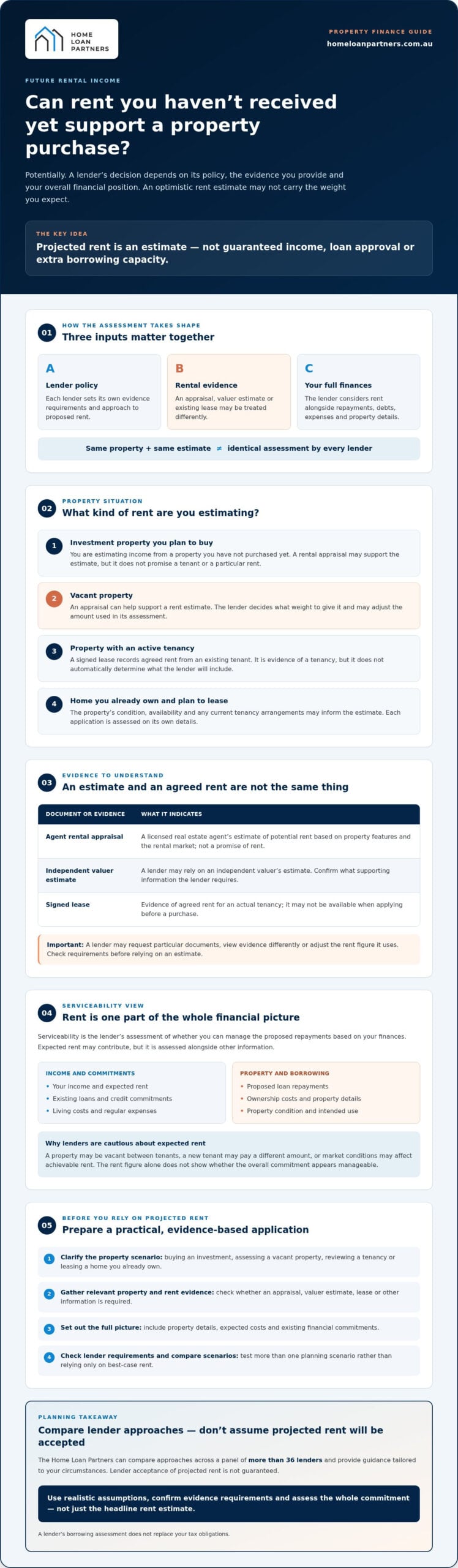
What to prepare before relying on future rent in your application
A clear file helps you and your broker test the purchase against realistic figures before making an offer. Work through these steps in order, and label estimates clearly so they aren’t mistaken for confirmed income or costs.
- 1. Research the property. Gather its listing or contract details, intended use, condition, and information about any current or planned tenancy. Note work that may be needed before it’s ready to rent.
- 2. Estimate rent carefully. Request a current rental appraisal for the specific property. If it’s already tenanted and relevant to your situation, organise the lease and note the rent and tenancy dates. Label an appraisal as an estimate.
- 3. Map out the costs. Record expected ownership and property expenses alongside proposed loan repayments. Consider whether your figures allow for a period without rent.
- 4. Organise your financial details. Prepare information about income, existing loans and other liabilities, regular living expenses, and financial commitments. A complete picture helps the lender assess the application as a whole.
- 5. Confirm lender requirements. Ask whether the lender will consider proposed rent for this property and application, which documents it accepts, and whether it requires a signed lease or has other conditions.
Documents and figures worth organising
Bring together income information, liability details, living expenses and property documents. Include a rental appraisal or lease if it’s available and relevant to your scenario. Check that the appraisal is current and relates to the property you’re considering. Ask whether the lender requires a particular format, source or additional evidence. Keep estimates separate from confirmed figures, and don’t present projected rent as income you already receive.
Questions to ask before making an offer
Before you commit, ask how the lender may treat proposed rent, what evidence it needs, whether a lease must be in place, and whether property-specific conditions could affect its assessment. You can use a home loan calculator to explore planning estimates, but its results aren’t a lender assessment or approval.
When using future rental income for a new purchase, test a conservative scenario as well as your expected one. Could you manage the costs if the property takes longer to lease or earns less rent than anticipated? A broker can help compare lender policies and sense-check assumptions before you make an offer. Discuss investment property loan options with The Home Loan Partners as part of your planning.
Compare your options and plan a purchase around realistic rental income
A rent estimate is only one part of a purchase plan. Before relying on it, compare how lenders assess proposed rent, what evidence they require, and how their approach fits your income, expenses, deposit, existing debts and proposed repayments. Consider whether the loan structure suits your broader plans, rather than focusing only on the rent figure used in an assessment.
It can help to test more than one scenario. For example, compare your budget if the property leases at the appraised rent with a scenario where it takes longer to find a tenant or earns less than expected. This won’t predict what a lender will decide, but it can show whether your plan depends too heavily on rent that isn’t confirmed. Using future rental income for a new purchase is more grounded when your figures leave room for uncertainty.
When a broker can help compare lender approaches
Lenders can differ in their rental evidence requirements and in how they assess proposed income. A broker can help you compare available options against your circumstances and the property details, then clarify what questions to ask before you proceed. The Home Loan Partners can compare options across a panel of more than 36 lenders. Panel access doesn’t guarantee a match, approval or acceptance of projected rent. For more on the broker’s role, read this finance broker guide.
A practical next step before you commit
Bring your income and expense details together with your deposit plans, property information and available rental evidence. Then ask how the lender may assess the proposed rent and what could change that assessment. Reviewing these assumptions before signing or making commitments based on unconfirmed income can help you make a more informed decision.
A personalised review can help connect the figures to your goals and identify lender approaches worth exploring. Discuss your investment property purchase plan with The Home Loan Partners, including the assumptions you’re using, so you can consider your next step with greater clarity.
Plan your next purchase with clearer assumptions
Using future rental income for a new purchase may help inform your plans, but lenders decide how proposed rent fits into each application. Their policies and evidence requirements can differ, and rental income is only one part of the assessment. A current appraisal or lease can support your estimate, but neither guarantees that a lender will accept the rent or approve the loan.
Before making a commitment, review the property details, expected costs, your income and existing financial commitments. Test a conservative scenario too, such as a delay before the property is leased or rent coming in below your estimate. That gives you a more balanced view than planning around the most optimistic figure.
The Home Loan Partners can provide personalised guidance for investment property lending, compare options across a panel of more than 36 lenders, and support you through the loan process. Comparing options can help you understand different lender approaches, without guaranteeing a particular outcome.
Take the next step with a clear view of your numbers and questions. Discuss your property plans with The Home Loan Partners, and move forward with a plan shaped around your circumstances.
Frequently Asked Questions
Can I use future rental income to qualify for a home loan in Australia?
Some lenders may consider proposed rent when assessing a property purchase, but acceptance depends on their current policy and the evidence available. A rental appraisal and a signed lease may be treated differently. The lender also reviews your wider financial position, including existing debts, living expenses and proposed repayments. Before relying on projected rent in your purchase plans, confirm what the lender needs for your specific property and application.
How do lenders calculate future rental income?
There isn’t one calculation that applies across all lenders. A lender may review the proposed rent, supporting evidence, property details and your other financial commitments, then apply its own assessment approach. Some may use an adjusted figure rather than the full estimate. Ask the lender or your broker how rent will be assessed in your circumstances, and verify any figures before making decisions based on them.
Do I need a signed lease to use rental income for a new purchase?
Not necessarily, but lender requirements vary. If a property is vacant or hasn’t settled, a current rental appraisal may be considered as evidence of expected rent. A signed lease provides different information about an agreed tenancy, but doesn’t guarantee the lender will accept the income as presented. Confirm which documents are needed for your application, and check whether the lender has conditions relating to the property or tenancy.
Will a rental appraisal increase my borrowing capacity?
A rental appraisal may support an estimate of potential income, but it won’t automatically increase your borrowing capacity. The lender considers its treatment of proposed rent alongside your income, living expenses, debts and proposed repayments. The result depends on your full application and the lender’s current policy. Treat an appraisal as evidence to discuss, not as a promise of a particular loan outcome or borrowing amount.
Can I use rent from my current home if I plan to move out?
A lender may consider expected rent from a home you plan to lease, subject to its policy and the evidence you can provide. The timing of the move and lease, a rental appraisal or signed tenancy agreement, and ongoing property expenses may all be relevant. Explain your plans clearly and ask how the lender wants the expected rent documented before including it in your purchase calculations.
What happens if the property earns less rent than expected?
If rent is lower than expected or the property is vacant, you may have less income while loan repayments and property expenses continue. Before buying, test whether your budget could manage a period without a tenant or rent below the estimate. A lender’s assessment doesn’t guarantee future rental performance. Where possible, plan for a financial buffer so your purchase isn’t dependent on receiving the full projected rent from the outset.
Can a mortgage broker compare lenders that accept future rental income?
A mortgage broker can help you compare lender approaches to proposed rent and understand what evidence may be requested. Share accurate details about your finances and the property so the options can be considered against your circumstances. The Home Loan Partners can compare options across a panel of more than 36 lenders. Policies can change, and a broker can’t guarantee approval or that a lender will accept projected rent.