

What changes when you apply for a home loan with a recently registered ABN? A mortgage application with a new ABN can feel challenging if your tax returns show only a short trading history. However, a shorter record doesn’t automatically rule out applying.
Many lenders generally look for at least two years of ABN or self-employment history. Some may consider a newer ABN, depending on your circumstances, business history and overall financial position. Rather than relying on tax returns alone, a lender may consider other evidence, such as Business Activity Statements, business bank statements or an accountant’s letter. Accepted documents vary, so check the requirements before lodging an application.
This guide explains how ABN age and previous experience may affect an assessment, which income and business records could help show your position, and what to compare when weighing your next steps. It also covers how full-documentation and alternative-documentation pathways may differ, so you can organise your evidence and explore options suited to your circumstances.
Key Takeaways
- A mortgage application with a new ABN is assessed in context. Business continuity, relevant experience and your overall finances can all help explain your position.
- Prepare a clear timeline of your business activity and organise personal and business records consistently before applying.
- Full-documentation and alternative-documentation pathways use different evidence. Lender requirements vary, so compare what each route may involve for your circumstances.
- Consider income alongside business expenses, existing liabilities and your capacity to meet repayments to understand how a lender may assess your position.
- A broker can help compare lender criteria and documentation options across a panel, but cannot guarantee an approval outcome.
Can you get a mortgage with a new ABN in Australia?
A new ABN doesn’t automatically qualify you for a mortgage, and it doesn’t automatically rule out an application. Lenders consider the wider picture: how you earn your income, what evidence supports it, your existing financial commitments and your capacity to meet repayments.
Many lenders typically look for around two years of ABN or self-employment history, but there’s no timeframe that applies across the market. Some may consider a shorter period, depending on their current criteria and your circumstances. Check each lender’s requirements before applying rather than relying on a general rule.
What does a new ABN tell a lender?
An Australian Business Number (ABN) identifies a business, but its registration date doesn’t show that the business has earned stable income throughout that period. Lenders may distinguish between when the ABN was registered and when trading began. They may also consider your industry experience and whether the business continues an established operation.
Those details can tell different stories. A recently registered ABN for a business that continues your previous work may have a different context from an ABN marking the start of self-employment in a new field. Lenders may weigh these factors differently, so check how a prospective lender assesses your specific history.
Does a new ABN mean you cannot borrow?
No. ABN age is one part of the assessment, not a decision on its own. Relevant experience in the same industry, a recent business restructure or ongoing employment alongside your business may help explain your circumstances. These factors don’t guarantee that a lender will accept your application or the income evidence you provide.
In short, a new ABN may affect the evidence a lender asks for. Whether you can borrow depends on the full assessment of your income, commitments and repayment capacity.
For example, if you’ve recently set up a company but have worked in the same trade for years, explaining that continuity may help a lender understand your business history. If you’ve only just started working for yourself, there may be less trading history to assess. In either case, clarify when the business began, what work you did before the ABN, and how your income is recorded.
Lender policies and acceptable evidence can change, so compare current criteria before lodging an application. A broker can help review your business timeline and income records against options across a lender panel, and explain which requirements to confirm. The aim is to find a pathway that fits your circumstances, not to assume one lender’s timeframe applies everywhere.
How lenders assess income when your ABN is new
With a short trading history, a lender may have less information to assess whether your income is dependable. They’ll generally look beyond business turnover to consider the income available to you, business expenses, personal liabilities and your capacity to meet repayments. Your business structure and the records you can provide also affect the assessment.
A lender may consider business continuity and relevant experience alongside recent financial results. For example, a new ABN following years of work in the same industry can help explain where your clients, contracts or income come from. That context can support your application, but it doesn’t replace evidence or guarantee that your income will be accepted.
Which income records may lenders ask to see?
Depending on the lender and your circumstances, evidence may include personal and business tax returns, financial statements, Business Activity Statements (BAS) or business bank statements. Full-documentation applications commonly rely on tax records, while some lenders may consider alternative documentation, such as BAS or bank statements. These are possible pathways, not universal requirements, and one record alone may not be enough.
An accountant’s letter may help explain your trading history or business structure, but it may not replace other records the lender requires. Confirm the current evidence checklist before applying, including whether records must cover a particular period.
How business history and income stability fit together
Prior work in the same field can provide useful context when you’re new to self-employment. A lender may still distinguish gross business revenue from the income available to you after business expenses and other obligations. The Australian Government explains how income tax works for businesses, including the role of assessable income and deductions, but lender calculations may follow their own policies.
Lenders consider both what your business earns and the records showing whether income is consistent and available to support repayments. Keeping personal and business finances clearly organised makes the evidence easier to follow.
For a mortgage application with a new ABN, compare the lender’s documentation pathway before lodging. Requirements can vary with your business structure and circumstances. A broker can help you review your income evidence against lender criteria across a panel. You can explore home loan comparison support to discuss your next steps.
Standard or alternative-documentation mortgage application: how to compare
If your business has a short trading history, the suitable documentation pathway depends on the evidence you can provide and what a lender currently accepts. Full-documentation applications generally rely on tax and financial records. Alternative-documentation options may use other evidence to help show income, but lenders still need to assess whether repayments are affordable.
Use this comparison as a starting point, not a universal checklist. Requirements can vary by lender, business structure and application.
| Pathway | Evidence that may be requested | What to consider |
|---|---|---|
| Full documentation | Personal and business tax returns, Notices of Assessment, and financial statements. | Established, consistent records may give a clearer view of income over time. Check which years and documents the lender requires. |
| Alternative documentation | Depending on lender policy, BAS, business bank statements or an accountant’s letter. | Confirm the lender accepts the evidence for your business type, and ask how it will assess income and repayments. |
The Australian Taxation Office’s ATO income and deduction rules explain the records used to work out business income and deductions. Keeping those records consistent can help you prepare, although a lender may ask for additional or different evidence.
When might full income documentation be the better fit?
If you have established tax returns and financial statements that tell a consistent story, full documentation may be the more straightforward route to assess. A complete evidence trail can help clarify how the business has performed and how income has changed over time. Before applying, confirm the lender’s current requirements, including which tax years, statements and supporting records it needs.
What should you check before considering an alternative-documentation option?
Ask whether the lender accepts your proposed evidence for your business structure and trading history. Then compare assessment conditions and loan features, not just the paperwork. Check any fees, pricing or other conditions for the specific option, and consider whether the overall loan suits your needs and repayment capacity.
For a mortgage application with a new ABN, “less paperwork” shouldn’t be mistaken for a lighter affordability assessment. Lenders still need to understand your income, expenses, liabilities and capacity to make repayments. Compare the documentation you can provide, the lender’s eligibility criteria and the loan’s features together, rather than choosing a pathway only because its documents seem quicker to assemble.
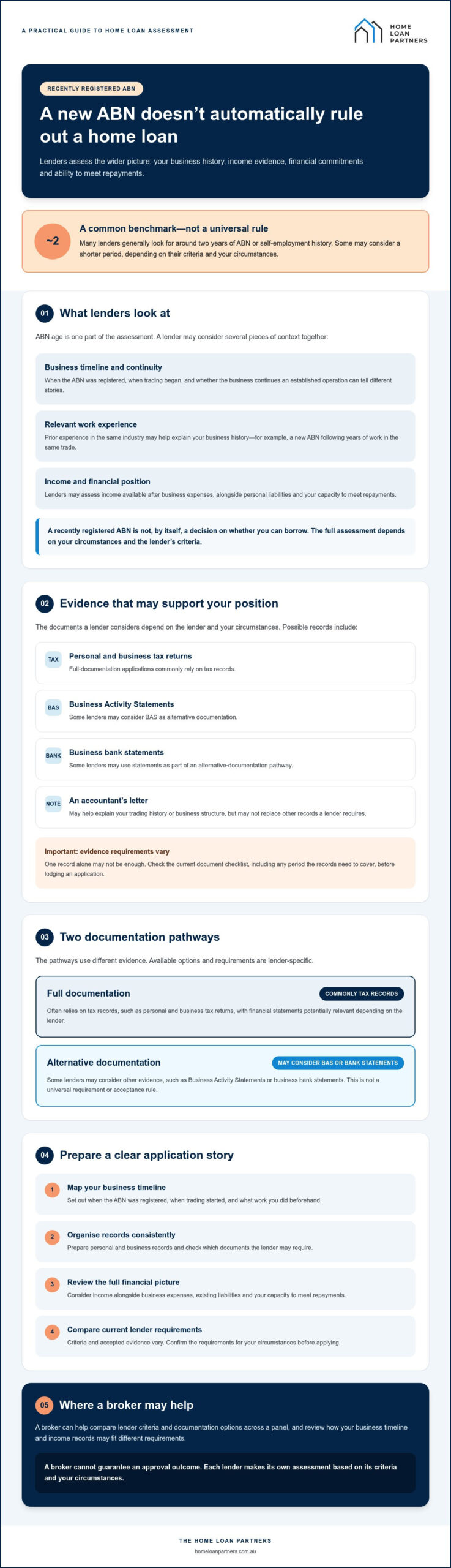
How to prepare a mortgage application with a new ABN
An organised application makes your business history and income easier to understand. Before applying, build a clear timeline, gather relevant records and check your financial commitments. This sequence can help you get started.
- Map your business timeline. Note when your ABN was registered and when trading began. Include changes to your business structure, periods of employment and relevant work in the same industry before becoming self-employed.
- Match records to the timeline. Organise tax returns, financial statements, BAS and business bank statements by date and business entity. This shows which period each document covers, particularly if you’ve changed structure or continued a business under a new ABN.
- Explain gaps or changes clearly. Write a short, factual summary of any breaks in trading, employment changes or restructure. Add supporting records where available, such as prior employment or business documents. Keep personal and business records clearly separated and consistent.
- Gather your financial information. Prepare identification, income evidence and business records, along with details of assets, debts and regular commitments. Check that figures and dates align across the documents you plan to provide.
- Review your borrowing position. List existing loans, credit commitments and regular expenses before discussing repayment capacity. A home loan calculator can provide an estimate to help you consider possible repayments, but it isn’t a lender assessment or approval.
- Confirm lender requirements before submitting. Ask which documents are accepted for your business type and how the lender will assess your income history. Requirements differ, so a prepared file doesn’t guarantee that every lender will consider it sufficient.
For a mortgage application with a new ABN, a concise explanation can connect your business timeline with the evidence you provide. If you’ve moved from employment into the same line of work, for example, make that transition clear and support it with relevant records. This gives a broker or lender useful context when reviewing your circumstances.
If you’d like help comparing lender criteria and preparing your next steps, discuss your options with a mortgage broker. A broker can help review your business history and documents against available lender pathways, without guaranteeing an outcome.
Choose your next step with a broker who can compare lender options
Before choosing a pathway, bring together the key parts of your application: your business timeline, available income evidence, existing commitments and the repayments you could manage. Asking focused questions can help you understand which lenders may consider your circumstances and what they’ll need to assess them.
Questions to ask before choosing a lending pathway
- What evidence may be considered? Ask whether the lender accepts your documents for your ABN history and business structure, and whether it needs supporting records.
- How will my position be assessed? Clarify how the lender considers income, business expenses, personal liabilities and repayment capacity.
- What happens next? Confirm the application steps, evidence required and any relevant conditions before deciding whether to proceed.
These questions are worth asking before submitting multiple applications. Each lender may apply different criteria, and an application involves more than matching your ABN age to a minimum timeframe. Discussing your goals and documents first can help you identify options worth exploring and any gaps you may want to address.
How a broker can support a new-ABN application
A broker can review your documented business history, income evidence and lending objectives, then compare them with lender criteria. The Home Loan Partners has access to a panel of over 36 lenders, providing a basis for comparing available options. A broker can explain differences in requirements and help you consider a suitable next step, but can’t guarantee approval or a particular lender outcome.
When choosing an Australian finance broker, look for clear explanations of how your circumstances will be assessed and what the proposed next steps involve. You should feel comfortable asking how a lender’s requirements relate to your ABN timeline, what evidence may be needed and how an option fits your longer-term plans.
A mortgage application with a new ABN calls for a considered comparison, not a rushed submission. With your records prepared and questions ready, you can have a more focused conversation about lender criteria, repayment capacity and the pathway that best fits your circumstances.
Talk through your mortgage application options and compare possible next steps with support tailored to your situation.
Take a clear next step towards your home loan
A new ABN doesn’t tell the whole story. Lenders may consider business continuity, relevant experience, income evidence, expenses and repayment capacity, with requirements varying between lenders. Preparing a clear business timeline and consistent records can help you explain your circumstances and compare full-documentation and alternative-documentation pathways.
A mortgage application with a new ABN isn’t guaranteed by having the right paperwork, but you don’t have to work out the options alone. The Home Loan Partners can provide personalised guidance and help compare lender criteria through a panel of over 36 lenders. Support is available nationally across Australia, with recommendations shaped around your circumstances and goals, not a promise of approval.
Ready to discuss what may suit your situation? Talk through your mortgage application options and take a considered next step towards your home ownership plans.
Frequently Asked Questions
Can I get a mortgage with a new ABN in Australia?
Yes, you may be able to apply, but a new ABN doesn’t guarantee approval or rule it out. For a mortgage application with a new ABN, lenders may consider when trading began, your industry experience, income evidence, expenses, liabilities and capacity to meet repayments. An ABN for an established business that has changed structure, for example, may tell a different story from a recent move into self-employment. Lender criteria vary.
How long does an ABN need to be active before applying for a home loan?
There’s no single timeframe that applies to every Australian lender. Many lenders commonly look for around two years of ABN or self-employment history, while some may consider a shorter period depending on your circumstances, business experience and financial position. The ABN registration date may differ from the date trading began. Check current requirements with prospective lenders before lodging an application.
What documents do self-employed borrowers need for a mortgage?
Depending on the lender and your circumstances, you may be asked for personal and business tax returns, Notices of Assessment, financial statements, BAS, business bank statements or an accountant’s letter. Full-documentation applications often rely on tax and financial records, while some lenders may consider alternative evidence. A single document may not be enough, and requirements can differ by business structure. Ask for the lender’s current checklist before applying.
Can I apply for a home loan if I have not lodged a tax return under my new ABN?
Possibly. Some lenders may consider alternative evidence, such as BAS or business bank statements, when tax returns covering the new ABN’s trading history aren’t available. An accountant’s letter may help explain your circumstances, but it may not replace records the lender requires. You may also need to show relevant prior business or employment history. Confirm which documents the lender accepts for your business type before submitting an application.
Does a new ABN affect my borrowing capacity?
It can affect how a lender assesses your income, which may influence the amount it considers affordable to borrow. Lenders may review income after business expenses alongside existing debts, regular commitments and repayment capacity. A short trading history can mean less evidence of consistent earnings, but the ABN date alone doesn’t determine borrowing capacity. The lender’s calculation depends on its criteria and your overall financial position.
Can a mortgage broker help with a home loan application using a new ABN?
Yes. A mortgage broker can review your business timeline and available income records, then compare them with lender requirements and possible application pathways. The Home Loan Partners has access to a panel of over 36 lenders and provides personalised guidance based on individual circumstances. A broker can help you understand what to check before applying, but can’t guarantee approval or a particular lender decision.