

Imagine finding your forever home this Saturday, only to realize your current house isn’t even listed yet. It’s a common heart-sinking moment for many Australian homeowners who fear missing out on a dream property while waiting for a sale. You want to move fast, but the confusion over managing two loans or the anxiety of “peak debt” can be paralyzing. Understanding how do bridging loans work in australia is the key to turning that stress into a strategic advantage.
We know the financial transition feels complex, especially with 2026’s tighter debt-to-income caps and shifting tax landscapes. It’s natural to want a steady hand to guide you through these hurdles. This guide will help you master the mechanics of bridging finance so you can buy your next home before selling your current one with total confidence. We’ll provide a clear timeline of the process, break down the actual costs, and confirm exactly what you need to be eligible in today’s market. By the end, you’ll see how this bridge serves as a reliable path to your future security.
Key Takeaways
- Learn exactly how do bridging loans work in australia to help you secure your next property before your current one is even off the market.
- Demystify the concepts of peak and end debt so you can manage your finances with complete transparency and peace of mind.
- Follow a proven 5-step timeline that streamlines everything from your initial equity check to final settlement.
- Discover the strategic advantages of avoiding double-moving costs and the stress of temporary rental accommodation.
- See how partnering with an expert who compares over 36 lenders ensures your loan structure is perfectly aligned with your long-term property goals.
What is a Bridging Loan and How Does it Function in 2026?
A bridging loan serves as a short-term financial tool designed to help you transition smoothly from one home to the next. It is a specialized type of finance that covers the gap between the purchase of your new property and the subsequent sale of your current one. The 2026 Australian property market moves quickly, and this “buy first, sell later” strategy has become a vital asset for homeowners who want to secure a dream property without the stress of a rushed sale. By understanding What is a Bridging Loan, you can move forward with a clear plan rather than feeling stuck in a holding pattern.
The mechanics are straightforward but require a steady hand to structure correctly. When you take out this type of finance, the lender uses the equity in your existing home as security for the new debt. Most Australian lenders provide a standard window of 6 to 12 months for you to sell your original property. This timeline is crucial. It gives you the space to market your home effectively and wait for a buyer who recognizes its true value. Knowing how do bridging loans work in australia allows you to manage this period with confidence, knowing your financing is secure while you finalize your sale.
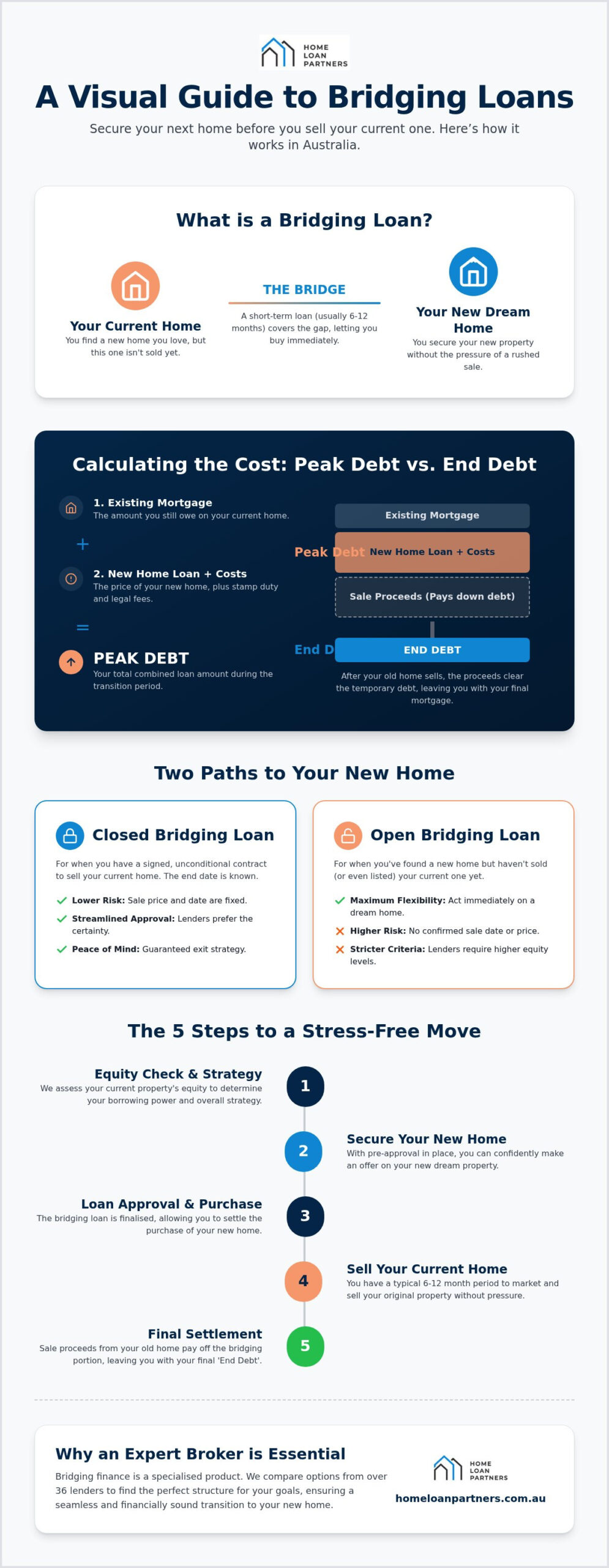
During this interim period, your total debt includes both your existing mortgage and the new loan. This is often referred to as your peak debt. While this might sound daunting, the goal is to keep this arrangement temporary. Once your first home sells, the proceeds go directly toward paying down that peak debt, leaving you with a manageable mortgage on your new property. This structure ensures you aren’t forced into making double repayments while you’re in the middle of a move.
Closed Bridging Loans: When You Have a Contract
A closed bridging loan is the most secure path for homeowners who have already secured a buyer. You use this option if you have a signed contract of sale for your current home, but the settlement date falls after you need to pay for your new purchase. Because the sale price and date are already fixed, lenders view this as a lower risk profile, which often leads to a more streamlined approval process. This is the preferred choice for conservative borrowers who value the peace of mind that comes with a guaranteed exit strategy.
Open Bridging Loans: The Ultimate Flexibility
Open bridging loans are designed for those who find their next home before they’ve even listed their current one. This provides the ultimate flexibility to act immediately on a “dream home” discovery, ensuring you don’t miss out in a competitive market. However, because there’s no confirmed sale date, lenders apply much stricter eligibility criteria and look for higher equity levels. It’s a powerful tool for strategic buyers, but it requires careful planning to manage the risks of a longer selling period without a fixed contract in place.
Calculating the Cost: Understanding Peak Debt and End Debt
Understanding how do bridging loans work in australia involves looking closely at two critical numbers: peak debt and end debt. Peak debt represents the highest point of your financial commitment during the move. It combines your existing mortgage, the full amount of your new loan, and any associated buying costs like stamp duty or legal fees. As you research How bridging loans work in Australia, you’ll find that lenders focus heavily on this figure to ensure you have the capacity to carry the total balance until your first home sells.
End debt is your final destination. It is the mortgage balance that remains on your new home after your old property has settled and the sale proceeds have been applied to the peak debt. Most lenders structure these loans so that interest is capitalized. This means you don’t have to find extra cash for repayments on the new loan while you’re busy packing boxes; the interest is simply added to the balance and cleared when the sale completes. Our team can help you map out these figures to ensure your transition remains stress-free and predictable.
The Role of Equity as Your Deposit
Your current home isn’t just a place to live; it’s a reservoir of capital that acts as your deposit for the next purchase. If your current home is worth $1 million and you owe $400,000, you have $600,000 in equity. A lender might allow you to use $200,000 of that “paper wealth” to secure your new home without needing a cash deposit. Keeping your total borrowing under the 80% Loan-to-Value Ratio (LVR) threshold is the gold standard. It helps you avoid the added cost of Lenders Mortgage Insurance and gives you more flexibility with your loan structure.
Interest Rates and Capitalisation Explained
Bridging rates are typically aligned with standard variable rates rather than the high “penalty” rates some borrowers fear. The real magic happens through interest capitalisation. Instead of making two sets of monthly repayments, the interest on the bridging portion is added to your peak debt. This protects your daily cash flow during the transition. You should consider the trade-off: while you save on cash outgoings today, your end debt will be slightly higher because of the interest that accrued during the bridging period. Mastering this balance is key to understanding how do bridging loans work in australia effectively.
Is a Bridging Loan Right for You? Pros, Cons, and Risks
Deciding whether to use bridging finance is as much a lifestyle choice as a financial one. For many Australian families, the prospect of moving twice or spending months in a cramped rental property is enough to stall their property goals. Bridging finance removes these hurdles by allowing you to stay in your current home until your new one is ready for you. It simplifies the logistics of the move and eliminates the high costs associated with temporary accommodation and double storage fees. You gain the luxury of time, which is often the most valuable asset during a property transition.
When you master how do bridging loans work in australia, you gain a sense of control over your timeline. Instead of being at the mercy of the market, you can wait for the right buyer for your original home while already enjoying your new life. This “steady hand” approach reduces the psychological pressure that often leads to poor decision-making during a move. It turns a chaotic life event into a structured, manageable process where you aren’t forced to settle for the first offer that comes your way.
The Strategic Advantages of Bridging
Buying with confidence at an auction is perhaps the greatest benefit of this path. Most sellers won’t accept a “subject to sale” clause in a competitive environment, especially with the tighter lending standards we see in 2026. Having your bridging finance in place means you can bid with the same certainty as a cash buyer. This is a critical step in understanding How do I buy a house in Australia? effectively. You also protect your family from the disruption of multiple moves, keeping school and social routines intact while you transition between properties.
Potential Pitfalls to Monitor
While the benefits are significant, you must remain realistic about your property’s current value. Overestimating your sale price can lead to a larger-than-expected end debt once the bridge is cleared. If the market dips during your bridging period, you might find yourself under pressure to accept a lower offer just to meet the 12-month deadline set by your lender. This “fire sale” scenario is the primary risk to manage. We encourage our clients to have a clear “Plan B,” which might involve a slightly lower reserve price or a more aggressive marketing strategy if initial interest is low. Understanding how do bridging loans work in australia means preparing for these variables before they become urgent issues.
The Bridging Loan Process: 5 Steps to a Stress-Free Move
Navigating a property transition requires a clear roadmap. While the financial concepts might seem complex, the actual path to your new front door follows five logical stages. Understanding how do bridging loans work in australia is much easier when you see it as a structured journey rather than a single transaction. Each step is designed to minimize risk and maximize your ability to act when the right opportunity appears.
- Step 1: Financial Health Check and Equity Assessment. We begin by looking at your current home’s value and existing mortgage. This professional assessment determines how much “usable equity” you have to fund your next move.
- Step 2: Securing Pre-approval. Before you start attending inspections, you need a firm commitment from a lender. This defines your maximum purchase price and gives you the green light to bid.
- Step 3: Finding and Purchasing Your New Property. With your finance ready, you can buy your next home with the confidence of a cash buyer, often bypassing “subject to sale” hurdles.
- Step 4: Marketing and Selling Your Existing Home. Once you’ve secured the new property, you focus on selling your original home within the agreed 6 to 12-month timeframe.
- Step 5: Settlement and Transition. After your old home sells, the proceeds clear the bridging portion of your debt. You then transition into your long-term mortgage structure for the new property.
If you’re ready to see what’s possible for your specific situation, get a tailored bridging assessment today from our expert team.
Getting Pre-Approved for Bridging
Pre-approval is even more critical for bridging than for a standard home loan. Lenders need to conduct valuations on both your current property and the one you intend to buy. This dual valuation ensures the equity levels are sufficient to cover the peak debt. Having this paperwork finalized empowers you to bid at auctions with absolute certainty. It gives you a competitive edge because you know exactly how do bridging loans work in australia from a lender’s perspective before you sign a contract.
Managing the Sale Window
The standard 6 to 12-month window provided by most Australian lenders is your window of opportunity. Choosing an agent who understands this timeline is vital. They should focus on a marketing strategy that prioritizes a clean sale within your bridging period. If you approach the end of your term without a sale, don’t panic. Proactive communication with your lender is key. Many institutions are open to discussing extensions if you can demonstrate a genuine effort to sell and a realistic “Plan B” for your pricing strategy.
Why an Expert Broker is Essential for Bridging Finance
Every lender in Australia views bridging finance through a different lens. While one major bank might have a low appetite for simultaneous loans, another might offer highly flexible terms for the exact same scenario. This variance is why understanding how do bridging loans work in australia requires more than just a quick chat with your current bank. A specialized broker acts as your project manager; they coordinate the complex moving parts of two property transactions to ensure nothing falls through the cracks.
The true value of a broker lies in their ability to perform the heavy lifting on your behalf. From negotiating with lenders to managing the strict documentation requirements, they provide the steady hand needed during a high-stakes transition. For homeowners seeking comprehensive support, VIR Advisory offers professional brokerage services that simplify these complex financial transitions. Most importantly, these professional services are typically paid for by the lender, not the client. This means you gain access to expert guidance and a panel of over 36 lenders without adding to your upfront costs. It turns a potentially overwhelming process into a streamlined path toward your next life milestone.
The difference between a “yes” and a “no” often comes down to which lender’s policy best fits your specific equity position. Some institutions are more comfortable with longer bridging periods, while others might offer higher Loan-to-Value Ratios (LVRs) for certain property types. By comparing a wide range of options, a broker finds the structure that minimizes your risk and maximizes your borrowing power. This strategic approach is a core part of our Bridging Finance in Australia Pillar, ensuring you don’t just get a loan, but the right loan for your long-term security.
The Home Loan Partners’ Collaborative Approach
At The Home Loan Partners, we view ourselves as your expert collaborators rather than just service providers. We understand the emotional weight of buying a new home while selling your old one, and we’re committed to making that journey as calm as possible. Our team handles the intricate details of application and lender negotiations, allowing you to focus on your move. We prioritize your understanding of how do bridging loans work in australia so you can make decisions with total clarity. If you’re ready to secure your dream home with a partner you can trust, speak with a specialist at The Home Loan Partners today to start your transition.
Take the Next Step Toward Your New Home with Confidence
Securing your next property before selling your current one doesn’t have to be a source of anxiety. By mastering how do bridging loans work in australia, you transform a complex logistical hurdle into a clear, manageable strategy. You’ve learned that managing peak debt is about protecting your cash flow while the interest capitalisation feature keeps your daily budget intact. This proactive approach allows your family to move once and settle into your new life without the disruption of temporary rentals or rushed sales.
Navigating this journey requires a steady hand and access to the right options. With expert guidance through complex property transitions and access to over 36 Australian lenders, we ensure your loan structure is perfectly tailored to your goals. This professional support is a lender-paid service, meaning you receive our full expertise at no cost to you. We’re here to handle the heavy lifting so you can focus on the excitement of your new home.
Let The Home Loan Partners bridge the gap to your next home and move forward with total peace of mind. Your dream property is within reach, and we’re honored to help you secure it.
Frequently Asked Questions
How much can I borrow for a bridging loan in Australia?
You can typically borrow up to 80% or 85% of the combined value of both properties. Lenders assess your capacity based on the peak debt, which is the total amount owed before your first home sells. In 2026, new debt-to-income caps limit total borrowing to six times your annual income. Having a healthy equity buffer of at least 20% in your current home is generally required to secure approval for these structures.
Do I need a deposit for a bridging loan if I have equity?
You don’t necessarily need a cash deposit if you have sufficient equity in your existing home. Lenders allow you to use this paper wealth as security for the new purchase. This is a core part of how do bridging loans work in australia for established homeowners. As long as your total borrowing stays within the lender’s LVR limits, your equity covers the deposit and buying costs like stamp duty and legal fees.
What happens if my house doesn’t sell during the bridging period?
If your property hasn’t sold by the end of the term, you should contact your lender immediately to discuss an extension. Most Australian lenders offer a 6 to 12-month window, but they’re often flexible if you show a genuine sales effort. In some cases, you might need to convert the debt into a standard mortgage or sell the new property. Proactive communication with your broker helps manage this risk effectively before deadlines pass.
Are bridging loan interest rates higher than standard home loans?
Bridging loan interest rates are typically aligned with standard variable rates rather than being a high penalty rate. As of August 2026, rates range from approximately 6.10% to over 10% depending on the lender you choose. While the rate itself is competitive, the total interest cost can be higher because it’s calculated on the peak debt. Capitalising the interest also means you’ll pay interest on the interest until the bridge is cleared.
Can I get a bridging loan for a construction project or renovation?
Yes, you can secure bridging finance for construction projects or major renovations. This structure allows you to stay in your current home while the new one is being built or updated. It’s a specialized arrangement where the lender manages progress payments to the builder. Once the construction is finished and your old home sells, the loan transitions into a standard mortgage based on the final valuation of the new property and your remaining debt.
Is it possible to get a bridging loan if I am retired?
Retirees can qualify for bridging finance if they have a clear exit strategy, which is usually the sale of their current home. Lenders focus on your equity levels rather than just employment income, as the loan is short-term and repaid from sale proceeds. We help retired clients navigate these applications by demonstrating how the sale will clear the debt, ensuring they can downsize or move closer to family without unnecessary financial stress.
What is the maximum term for a bridging loan in 2026?
The maximum term for a bridging loan in Australia is typically 12 months for most major lenders. Some specialized products in the market can extend up to 24 months for owners of established properties. This timeframe is designed to give you enough room to market and settle your original home. It’s vital to choose a term that matches your local market’s average selling time to avoid unnecessary pressure as the deadline approaches.
Do I have to make repayments on two loans at the same time?
You don’t usually have to make repayments on two loans simultaneously. Most lenders offer interest capitalisation, where the interest on the bridging portion is added to your total loan balance. You continue making your normal repayments on the original mortgage amount, while the new interest is cleared when your first home sells. This protects your monthly cash flow during the transition, making the move much more manageable for your household budget and peace of mind.