

What if the most stressful part of moving home, the pressure to sell your current house before you can bid on the next one, simply didn’t exist? Many Australians feel trapped between a rock and a hard place when their dream home appears before their current property is even listed. You might worry about being forced into a fire-sale or feel anxious about managing two full mortgages at once. Understanding how do bridging loans work in australia is the key to unlocking a seamless transition that protects your equity and your peace of mind.
It’s completely natural to feel overwhelmed by the thought of peak debt, especially with the RBA cash rate sitting at 4.35% as of May 2026. These specialized loans act as a financial safety bridge, allowing you to secure your new property now while you sell your old one on your own terms. In this guide, we’ll demystify interest-only periods and explain why bridging loans are exempt from the latest APRA debt-to-income caps. We’ll provide a clear path forward so you can avoid the hassle of moving twice and focus on your next major life milestone.
Key Takeaways
- Understand how bridging finance serves as a short-term tool to secure your new property without waiting for your current home to sell.
- Clarify the financial transition by learning how do bridging loans work in australia, specifically the difference between your temporary peak debt and your final end debt.
- Choose between closed or open bridging structures to match your specific selling timeline and contract status.
- Weigh the interest and fees of bridging against the significant costs and emotional stress of renting, double-moving, or storing your belongings.
- Leverage the expertise of a dedicated collaborator to access over 36 lenders and find a tailored solution for your unique property journey.
What is a Bridging Loan and How Does it Solve the ‘Buy vs Sell’ Dilemma?
A bridging loan is a specialized, short-term financial tool designed to “bridge” the gap between purchasing a new property and settling the sale of your current one. If you’ve ever wondered What is a Bridging Loan, it’s essentially a temporary mortgage that covers your existing debt and the cost of your new home simultaneously. In the current 2026 Australian property market, where high-quality homes often move from “listed” to “sold” within days, this flexibility is a game-changer. It allows you to act with the speed of a cash buyer by using the equity in your current home as the deposit for your next one. Instead of waiting months for a settlement check to clear, you can secure your future home the moment it hits the market.
Understanding how do bridging loans work in australia is essential for homeowners who want to maintain momentum in a fast-paced environment. Instead of the traditional “sell then buy” sequence, which often leaves families stranded in the rental market, bridging finance allows you to stay in your current home while you transition. This proactive approach takes the heavy lifting out of the moving process and ensures you don’t miss out on the perfect property while waiting for a buyer.
Why Homeowners Choose Bridging Finance
The decision to use bridging finance often comes down to protecting your quality of life and your bank balance. Moving house is ranked as one of life’s most stressful events; bridging eliminates the need to pack, move into a rental, and then pack and move again six months later. Renting for a short period can also cost tens of thousands of dollars in non-deductible expenses. Perhaps most importantly, when you aren’t desperate for a quick settlement to fund your next purchase, you have the leverage to wait for the right offer on your current property. You won’t be forced into a “fire sale” price just to meet a deadline.
The Typical Bridging Period in Australia
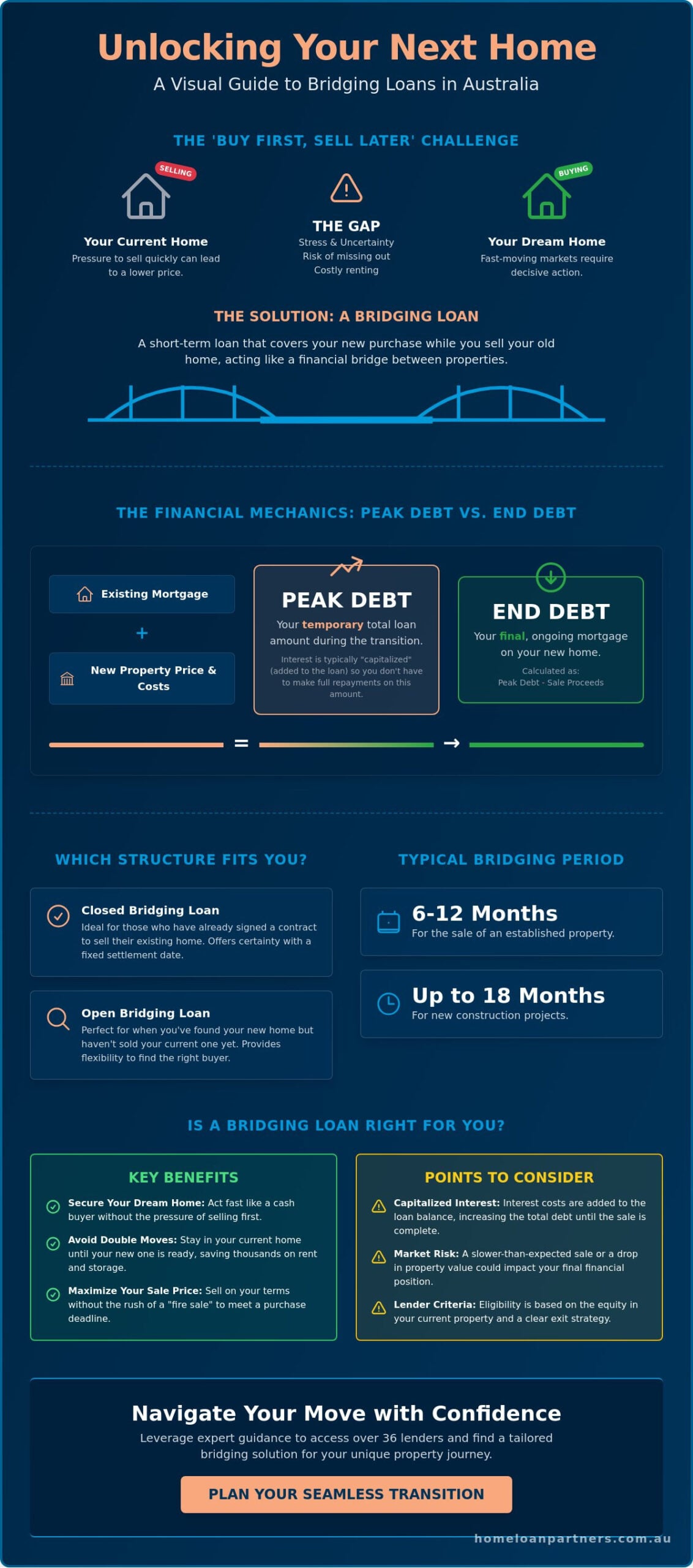
Lenders typically structure these loans with a clear exit strategy in mind. For established homes, the standard timeframe is between 6 to 12 months. This gives you ample time to prepare your property for market, run a full auction campaign, and reach settlement. If you’re undertaking a new build, some lenders offer extended terms of up to 18 months for construction projects. It’s important to remember that the goal is always a clean transition. Lenders expect the original property to be sold within this window to clear the “peak debt” and leave you with a manageable, long-term mortgage on your new home.
The Financial Mechanics: Understanding Peak Debt and End Debt
To truly understand how do bridging loans work in australia, you need to look at two critical figures: Peak Debt and End Debt. Peak Debt represents the highest point of your financial commitment during the transition. It’s the combined total of your existing mortgage, the purchase price of your new home, and any associated buying costs like stamp duty or legal fees. While this number might look intimidating on a bank statement, it’s a temporary placeholder. Once your original property sells, the proceeds are immediately applied to this balance. What remains is your End Debt, which becomes your standard, ongoing mortgage for your new home.
Lenders calculate your eligibility primarily based on the equity you’ve built in your current property. This approach prioritizes your overall security rather than just your monthly cash flow. You’ll find it reassuring that, in most cases, you don’t have to pay the principal on the Peak Debt during the bridging period. This structure is specifically designed to alleviate the pressure of managing two full mortgages at once. If you want to see how these numbers look for your specific situation, connecting with a dedicated mortgage broker can provide a clear, personalized breakdown of your potential debt structure.
How Interest is Calculated During the Bridge
Interest during this period is often “capitalized,” meaning it’s added to your Peak Debt rather than paid out of pocket each month. This compounded interest model keeps your daily expenses low while you focus on your move. However, it’s vital to understand the risks of bridging finance, particularly how interest can grow if your property takes longer to sell than anticipated. For those who prefer more control, interest-only repayment options are often available to manage cash flow. Most lenders offer these loans at standard variable rates, ensuring you aren’t penalized with high-interest costs for your flexibility.
LVR Requirements and Equity
Lenders usually cap the total Loan-to-Value Ratio (LVR) at 80% across both properties. This 20% buffer protects you and the bank against market fluctuations during the selling process. To calculate your usable equity, you combine the estimated values of your current and future homes and subtract your total debt. If the resulting figure stays below the 80% threshold, your application is much more likely to be approved. A broker acts as your expert collaborator here, comparing equity requirements across a panel of 36+ lenders to find the most supportive fit for your goals.
Closed vs. Open Bridging Loans: Which Structure Fits Your Timeline?
Choosing the right loan structure depends entirely on where you currently stand in your property journey. While the general concept remains the same, the specific path you take is determined by whether you’ve already found a buyer for your current home. Deciding between these options requires a firm grasp on how do bridging loans work in australia, as the structure directly impacts your approval chances and how the lender views your risk profile. Whether you’re at the very start of your search or you’ve already signed a contract of sale, a dedicated broker can help you organize the necessary paperwork to ensure a smooth transition.
Most homeowners find themselves navigating one of two distinct paths. Both options provide the funds needed to secure a new home, but they cater to different levels of certainty regarding your exit strategy. By understanding these structures, you can move forward with the confidence that your financial safety bridge is built on solid ground.
The Benefits of Closed Bridging Finance
Closed bridging is widely considered the most secure and straightforward option for families. This structure is designed for those who have already “exchanged” contracts on their current property but haven’t yet reached the settlement date. Because the sale price and the completion date are legally fixed, the risk to both you and the lender is significantly lower. Approval is often easier to obtain because the bank has total certainty regarding how and when the peak debt will be cleared. It’s an ideal solution for those who need to move quickly into their new home before the funds from their sale are officially in their bank account.
When to Consider Open Bridging Finance
Open bridging finance offers the ultimate flexibility for buyers who want to secure their dream home before even listing their current property. While this is a very common approach in the Australian market, it does come with stricter lending criteria. Since there’s no fixed sale date, lenders will perform more rigorous “stress tests” on your finances. You’ll generally need a larger equity buffer to satisfy these requirements. This ensures you can comfortably manage the peak debt if your property takes a few extra months to sell.
The team at The Home Loan Partners acts as your expert collaborator during this process. We take the heavy lifting out of managing an open bridge by providing the following support:
- Assessing your borrowing capacity across multiple market scenarios.
- Identifying lenders who offer the most favorable terms for open-ended terms.
- Structuring your application to highlight your equity strength and exit strategy.
- Providing a steady hand to navigate the complexities of interest capitalization.
This supportive approach allows you to focus on finding the right buyer for your home without the pressure of a ticking clock. Having an expert manage the technical details ensures that your transition remains a positive milestone rather than a source of stress. We stay by your side until the final settlement is reached, ensuring you feel protected at every turn.
Assessing the Costs and Risks: Is Bridging Finance Right for You?
Many homeowners hesitate when they see the setup fees associated with bridging finance. However, it’s essential to look at the bigger picture. When you ask how do bridging loans work in australia, you must weigh the upfront costs against the alternative. Renting a temporary home while you wait for a settlement can cost thousands in non-refundable expenses. Add the price of double removalist fees, professional cleaning, and the emotional toll on your family, and the “cheaper” option of selling first often becomes significantly more expensive. Bridging finance isn’t just a loan; it’s an investment in your family’s stability that prevents the exhaustion of moving twice.
The primary concern for most clients is the risk of their current home remaining on the market past the agreed term. While this is a valid worry, it’s one we manage together through careful planning. Experienced brokers don’t just set up the loan and walk away. We build contingency strategies into your plan from day one. If a sale takes longer than expected, having access to a broad panel of 36+ lenders means we can explore alternative exit options or extensions that a single bank simply won’t offer. This professional oversight ensures you aren’t left stranded if the market shifts.
The True Cost of Bridging
Beyond the interest rate, you should prepare for setup costs like application fees, property valuations, and legal document preparation. These are the necessary steps to ensure both properties are properly secured and that your transition is legally sound. During this period, interest often “capitalises” to protect your monthly budget. Capitalised interest is interest that is added to the loan balance rather than paid out of pocket. This structure allows you to focus your cash flow on your new home without the burden of immediate repayments on the peak debt. If you’re ready to see if this structure fits your goals, speak with our bridging loan specialists to map out your specific numbers.
Risk Mitigation Strategies
We prioritize a “safety-first” approach to ensure your transition stays on track. This starts with getting a conservative, realistic valuation on your current home early in the process. By setting a “drop-dead” sale price, we ensure your final end debt remains within a comfortable range for your lifestyle. Our role as your expert collaborator is to navigate these variables with precision. Having a broker with access to multiple lenders provides more “exit” options if your initial bank’s policy doesn’t perfectly align with a longer-than-expected sales campaign. We stay with you throughout the journey, providing a steady hand until the final settlement is complete.
How The Home Loan Partners Simplify Your Bridging Journey
At The Home Loan Partners, we believe you shouldn’t have to manage the heavy lifting of a property transition alone. We act as your expert collaborator, turning what can be a complex financial process into a strategic tool for your family’s future. While a single bank can only offer you their own specific products, we provide access to over 36 lenders. This diversity is crucial because every family’s timeline and equity position is unique. Whether you are moving between suburbs in Greenwich or looking for a lifestyle change in Port Macquarie, our guidance is tailored to your specific regional market and personal goals. We provide the steady hand you need to move forward with confidence.
We don’t just facilitate a transaction; we build a long-term relationship that supports you through the initial bridge and the duration of your ongoing loan. Understanding how do bridging loans work in australia is much easier when you have a dedicated partner navigating the options for you. We prioritize clarity and transparency, ensuring you feel secure at every stage of the journey. Our team manages the technical details and lender negotiations so you can focus on the excitement of your new home.
Our 3-Step Stress-Free Bridging Process
We’ve refined our approach to ensure your transition is as smooth as possible. Our process is designed to eliminate surprises and keep you in control of your timeline.
- Step 1: Equity and Borrowing Power Assessment. We analyze your numbers before you start shopping. This ensures you know exactly how much equity you can leverage and what your end debt will look like.
- Step 2: Tailored Loan Structuring. Every move is different. We match the loan structure to your specific selling timeline, ensuring the interest and repayment terms align with your cash flow needs.
- Step 3: Seamless Settlement Management. We handle the coordination between lenders and conveyancers. This proactive management ensures that both settlements occur without unnecessary delays or stress.
Taking the First Step Toward Your New Home
If you’re ready to secure your next property without the pressure of a fire sale, we’re here to help. We encourage you to reach out for a no-obligation chat to explore your bridging options. Because our fees are paid by the lenders, you receive professional, unbiased advice that is focused entirely on your best interests. We’ll help you navigate the 2026 market with precision and care, ensuring your next move is a successful one. Book a personalised bridging loan consultation with The Home Loan Partners today and let’s start planning your seamless transition.
Secure Your Future Home with Confidence
Moving into your next property should be an exciting milestone, not a period of financial uncertainty. By mastering how do bridging loans work in australia, you gain the freedom to buy when the right opportunity appears, rather than waiting for the perfect buyer to find you. You’ve seen how these loans eliminate the need for double moves and protect you from the pressure of a fire sale. Now, it’s time to put that knowledge into action with a partner who understands the local market and your personal goals.
The Home Loan Partners act as your steady hand throughout this journey. We provide access to 36+ lenders to find tailored structures that fit your specific timeline, while our expert guidance helps manage the risks of peak debt. Best of all, our service is lender-paid, meaning you receive unbiased professional support without any upfront brokerage fees. Ready to move without the stress? Speak to our bridging loan specialists today.
Your dream home is waiting. Let’s make the transition as seamless and rewarding as possible.
Frequently Asked Questions
How much deposit do I need for a bridging loan in Australia?
In most cases, you don’t need a cash deposit because you use the equity in your current home to secure the new purchase. Lenders typically allow a maximum Loan-to-Value Ratio (LVR) of up to 85% across both properties combined. This means if your existing equity covers the gap and buying costs, you can move forward without dipping into your savings or liquidating other assets.
Can I get a bridging loan if I haven’t sold my house yet?
Yes, this is known as an “open” bridging loan and it’s a common strategy for homeowners who find their dream home before listing their current one. Since there isn’t a signed contract of sale yet, lenders will perform more rigorous checks on your equity levels. This structure gives you the flexibility to buy first and then focus on achieving the best possible price for your old home.
What happens if my house doesn’t sell within the bridging period?
If your property remains on the market beyond the standard 6 to 12 month term, we recommend contacting your broker immediately to discuss an extension or alternative exit strategy. Lenders may grant extra time depending on your circumstances, but it’s important to remember that interest continues to compound. We help you set a realistic “drop-dead” sale price early on to ensure your end debt remains manageable regardless of market shifts.
Are interest rates higher on bridging loans than standard mortgages?
Bridging loan interest rates in 2026 generally start around the mid-6% mark, though they can exceed 10% p.a. depending on the lender. While these rates are often standard variable rates, they can be slightly higher than the most competitive basic mortgages. Understanding how do bridging loans work in australia helps you see that this short-term cost is usually offset by avoiding the high price of renting and moving twice.
Can I use a bridging loan for a new construction or renovation?
You can use bridging finance for construction or renovations, though the lending criteria are more specialized. For renovation-specific bridging loans, lenders usually cap the LVR between 70% and 75% to provide a larger safety buffer during the build. Some lenders even offer extended terms of up to 18 months for construction projects to ensure you have enough time to complete the work before selling your original property.
How do lenders calculate my borrowing power for a bridging loan?
Lenders focus on your “Peak Debt,” which is the total combined amount of your current mortgage, the new purchase price, and all associated buying costs. They assess your ability to service the final “End Debt” once your old home sells. It’s helpful to know that bridging loans are exempt from the high debt-to-income caps introduced by APRA in February 2026, giving lenders more flexibility to support your transition.
Is it better to sell first or buy first in the 2026 property market?
Buying first is often the smarter choice in the current market because it prevents you from being forced into a temporary rental or a rushed purchase. If you sell first without a new home ready, you face the stress of moving twice and the risk of prices rising while you’re out of the market. Bridging finance allows you to secure the right property on your own terms while maintaining total control over your selling campaign.
Do I need to make repayments on two loans at the same time?
Most bridging loans are structured with “capitalized interest,” so you don’t have to make out-of-pocket repayments on the peak debt during the bridging period. The interest is simply added to the loan balance and cleared when your current property sells. This approach protects your monthly cash flow and ensures you aren’t burdened with two full mortgage payments while you’re in the middle of a move.